
Yes, Section 8 housing is a solid investment due to guaranteed rental income, lower vacancy rates, and long-term tenant stability. The Housing Choice Voucher (HCV) Program provides government-backed payments from the Department of Housing and Urban Development (HUD), ensuring Section 8 landlords receive consistent rent payments, around 70% of the rent from the government. This makes Section 8 properties particularly attractive for investors seeking low-risk investments with steady cash flow, especially in D-class neighborhoods where affordable housing is in high demand.
The Section 8 housing program also leads to long-term tenants, reducing turnover cost and hassle of tenant turnover, enhancing return on investment (ROI). Investors also benefit from property appreciation, especially in high-demand, affordable housing markets. Section 8 properties must meet Housing Quality Standards (HQS) and undergo regular property inspections, which help maintain the property’s condition and its long-term value.
However, investors must be prepared to navigate the bureaucracy and red tape involved in the program. Additionally, compliance with Fair Market Rent (MFR) guidelines and understanding the Request for Tenancy Approval (RFTA) process are essential to maximize the investment's profitability.
You should invest in Section 8 housing for guaranteed rental income, lower vacancy rates, long-term tenant stability, reduced financial risk, and government-backed payments. With the government covering around 70% of the rent, investors enjoy reliable cash flow, especially in D-class neighborhoods where affordable housing demand is high. Additionally, Section 8 properties offer recession-resistant income and potential tax benefits, making them a smart, low-risk investment option.
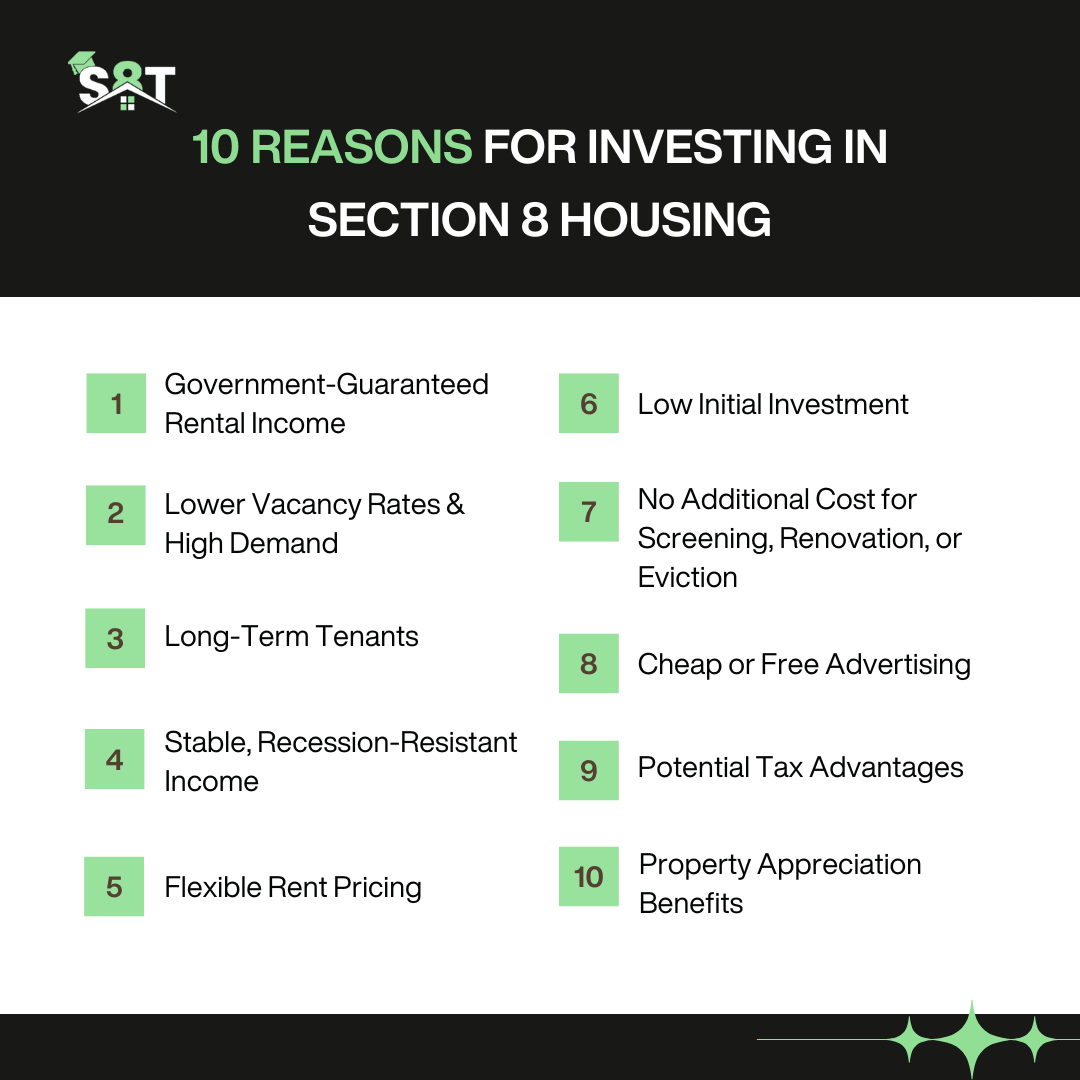
10 reasons for investing in Section 8 housing are as follows:
One of the biggest reasons for investing in Section 8 housing is the government-guaranteed rental income through the Housing Assistance Payments (HAP) contract. With the Public Housing Authority (PHA) overseeing the program, around 70% of the tenants’ rent is covered by the government, ensuring consistent, reliable payments even if tenants face financial hardships. This makes Section 8 properties a low-risk investment, particularly in D-class neighborhoods where there is a high demand for affordable housing. Additionally, the government-backed payments provide recession-resistant income, offering Section 8 landlords a steady cash flow. The program’s long-term tenants further reduce turnover costs, while the HAP contract helps maintain a reliable return on investment (ROI) over time.
Investing in Section 8 housing leads to lower vacancy rates and ensures consistent tenant demand. Due to the affordability of subsidized rent, Section 8 properties are highly sought after, especially in D-class neighborhoods where affordable housing options are limited. With around 70% of the rent covered by the government, tenants are more likely to stay long-term, reducing the frequency of vacancies and turnover. This high demand, combined with the stability of the Housing Choice Voucher (HCV) Program, ensures that Section 8 housing remains occupied. Such a consistent occupancy rate helps Section 8 landlords ensure a steady stream of income, minimizing the risks associated with empty rental units.
If you invest in Section 8 housing, you will benefit from long-term tenants, reduced turnover costs, more stable cash flow, and a reliable, government-backed rental income stream. The Housing Choice Voucher Program provides subsidized rent, encouraging tenants to stay in the property for many years, particularly in D-class neighborhoods where affordable housing is scarce. This stability reduces the need for frequent property management interventions and minimizes expenses related to tenant screening, advertising, and maintaining the property between leases. With long-term tenants in a federally subsidized housing program, Section 8 landlords can enjoy steady income flow and fewer vacancies, making Section 8 housing a more predictable investment for enhanced ROI.
Section 8 investment provides stable, recession-resistant income, with guaranteed rental payments funded by the Department of Housing and Urban Development (HUD). With subsidized rent covering 70% of the tenant’s payments, Section 8 landlords are assured of consistent income, even during economic downturns or market instability. This makes Section 8 properties particularly attractive during recessions, as they are less affected by the volatility of private rental markets. Additionally, government-backed payments ensure that public housing authorities (PHA) continue to cover tenants' rent, reducing financial risks for investors. This makes Section 8 investment a low-risk, consistent source of income, with reliable long-term cash flow.
Since Section 8 housing is regulated by Fair Market Rent (MFR) standards, investing in these properties allows Section 8 landlords to adjust rents based on local market conditions while staying compliant with government regulations. The Housing Assistance Payments (HAP) program ensures that a portion of the rent is subsidized by the government, providing a reliable income stream for investors. This helps Section 8 landlords to set competitive rents, particularly in high-demand neighborhoods where affordable housing options are limited. By aligning rent with payment standards and local demand, investors can maximize their return on investment (ROI), all while benefiting from the security of government-backed rental payments that reduce the risk of vacancy and missed payments.
Investing in Section 8 housing requires a low initial investment compared to other real estate opportunities, particularly in D-class neighborhoods or areas with a high demand for affordable housing. Because the Housing Assistance Payments (HAP) cover a portion of the rent, landlords face lower upfront costs related to rent collection and financial risk. Additionally, investors can acquire below-market properties or capitalize on value-add opportunities, allowing them to enter the market with a smaller financial commitment. With the government subsidizing part of the tenant’s rent, Section 8 properties offer a more accessible entry point, making it a great option for both new and experienced investors looking for stable returns.
Putting your money into Section 8 housing removes costs associated with tenant screening, renovations, and evictions. The PHA conducts comprehensive tenant screening to ensure applicants meet eligibility requirements, reducing the need for landlords to invest in background checks, credit reports, or income verification. Housing Quality Standards (HQS) inspections ensure that the property is maintained to a high standard, often reducing the need for expensive repairs or renovations. In case of eviction, the federally subsidized housing program provides clear guidelines and legal support, making the process smoother and cost-effective than traditional private landlord evictions. This streamlined system helps investors save on operational expenses and enhances overall profitability, making Section 8 properties a more efficient and profitable investment.
Financing your capital in Section 8 housing offers significant savings on advertising costs, as PHAs provide free or low-cost listing services for available properties. Many PHAs maintain online portals where Section 8 landlords can post property listings at no charge, giving them direct access to a pool of qualified tenants. Since Section 8 tenants are actively looking for government-approved housing, landlords do not have to rely on expensive marketing campaigns or third-party platforms. This access to subsidized housing networks makes advertising for Section 8 properties a cost-effective option, helping investors maximize their returns by reducing operational expenses.
Section 8 investment allows landlords to reduce their taxable income through various deductions related to property management, maintenance costs, and capital improvements. Expenses such as repairs, insurance, utilities, and mortgage interest on Section 8 properties are typically tax-deductible, providing immediate financial relief. Additionally, investors may qualify for Low-Income Housing Tax Credits (LIHTC) if they develop or rehabilitate affordable housing, offering further tax incentives. These benefits, combined with the government-backed rental payments and reduced vacancy risks, make Section 8 housing a highly tax-efficient investment, maximizing return on investment (ROI) for property owners.
Section 8 investment offers the potential for property appreciation, as the stability of government-backed rental payments and increasing demand for affordable housing can lead to long-term value growth. Although Fair Market Rent (MFR) guidelines set rent caps, the underlying property values can still rise due to improvements in the neighborhood or increased demand for affordable housing. Additionally, participation in government programs like Low-Income Housing Tax Credits (LIHTC) and Rental Assistance Demonstration (RAD) can enhance the property’s value through grants, renovation incentives, and redevelopment efforts, resulting in both consistent cash flow and appreciation over time. This combination of reliable income and potential property growth makes Section 8 properties a solid investment.
Before entering the Section 8 housing program, investors should be aware that properties must meet Housing Quality Standards (HQS) and comply with Fair Market Rent (MFR) guidelines set by the Public Housing Authority (PHA). These requirements ensure the property meets the housing standard and that rent aligns with local market expectations. Section 8 landlords also need to manage tenant eligibility and adhere to government regulations, which can involve more paperwork compared to traditional rentals.
To effectively navigate these complexities and ensure a smooth experience, investors must also invest in Section 8 training. This training will provide a clear understanding of the program’s specific requirements, helping investors manage tenant eligibility, HAP payments, and PHA processes with confidence. Being well-prepared through the Section 8 training course can help investors avoid common pitfalls, optimize their investment, and ensure long-term success in managing Section 8 properties.
.svg)
Section 8 rental investing education for serious operators.


