To become a Section 8 landlord, you must meet HUD housing standards, register with your local Public Housing Agency (PHA), and qualify under the Housing Choice Voucher (HCV) Program to receive Housing Assistance Payments (HAP). This federally supported system provides consistent, on-time rent backed by the U.S. Department of Housing and Urban Development (HUD) and helps landlords maintain stable, long-term tenancies.
The Section 8 program, established under the Housing Act of 1937, allows landlords to rent to eligible low-income families using federally funded rental subsidies. Local PHAs manage inspections, payments, and tenant approvals, while landlords maintain properties that meet Housing Quality Standards (HQS) and HUD’s NSPIRE inspection model.
Participation in the program ensures steady income and supports affordable housing, while landlords who follow HUD regulations and maintain property standards build credibility and long-term profitability.
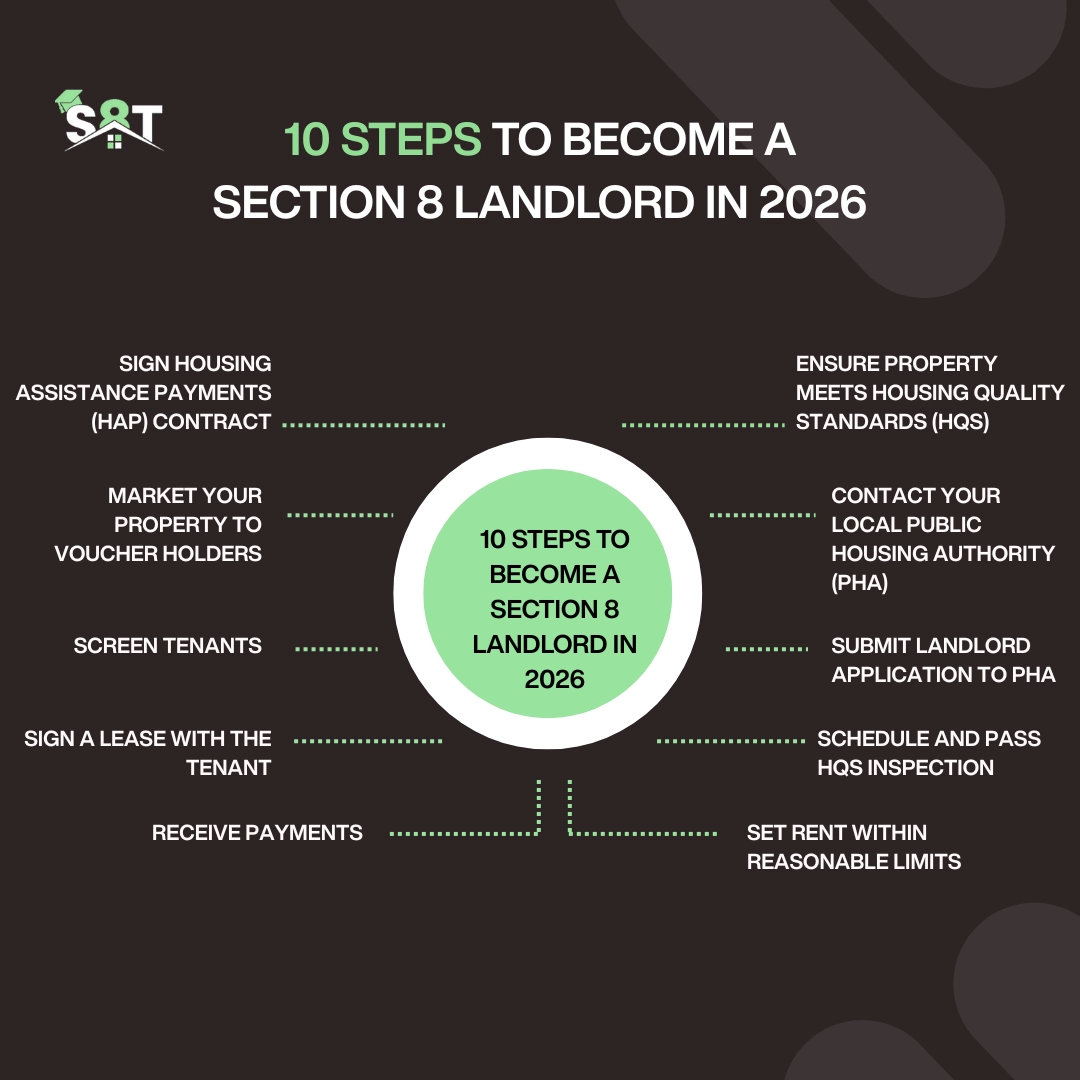
Follow these 10 steps to become a Section 8 landlord and confidently prepare your property for the 2026 HUD compliance framework.
Before your property can be approved for the Section 8 Housing Choice Voucher (HCV) Program, it must meet the Housing Quality Standards (HQS) set by the HUD and verified by your local PHA. These standards ensure that all rental units are safe, sanitary, and decent for low-income tenants.
Each rental property must comply with the following HQS criteria:
In 2026, HUD’s NSPIRE standards (National Standards for the Physical Inspection of Real Estate) will replace traditional HQS with updated safety and maintenance rules. Under 24 CFR Part 982, PHAs will conduct initial and annual inspections to verify compliance. Landlords must fix any issues before HAPs can continue.
Common failures include plumbing leaks, broken locks, and exposed wiring. Conducting a quick self-inspection and using HUD Exchange checklists or property management software helps landlords stay prepared. Keeping your property HQS-compliant ensures eligibility, uninterrupted HAPs, and long-term rental stability.
Once your property meets HUD housing standards, the next step is to contact your local PHA to begin the registration and approval process for the HCV Program. Each PHA operates under HUD’s federal guidelines but manages its own landlord enrollment, inspections, and payments locally.
Follow these 5 steps to contact your local PHA:
Each PHA follows slightly different local rules or payment processes, so maintaining clear and regular communication helps move your application forward smoothly. Many landlords keep a dedicated folder or digital file to store PHA correspondence, inspection results, and payment details.
Clear and consistent communication with your PHA ensures faster listing approval, clear inspection scheduling, and on-time HAP once your property is approved for the Section 8 program.
After contacting your local PHA, the next step is to submit a landlord application to officially participate in the Housing Choice Voucher (HCV) Program. This application confirms your eligibility and allows the PHA to review your property for inclusion in the Section 8 housing system.
Follow these 5 steps to complete your landlord application:
Keep copies of all submitted forms and confirmation receipts. Accurate, organized documentation speeds up the approval process and ensures your property is ready for the HQS or NSPIRE inspection phase.
Once your landlord application is approved, the Public Housing Agency (PHA) will schedule a Housing Quality Standards (HQS) inspection to verify that your property meets all HUD safety and maintenance requirements. This step ensures the unit is safe, sanitary, and ready for tenants under the HCV Program.
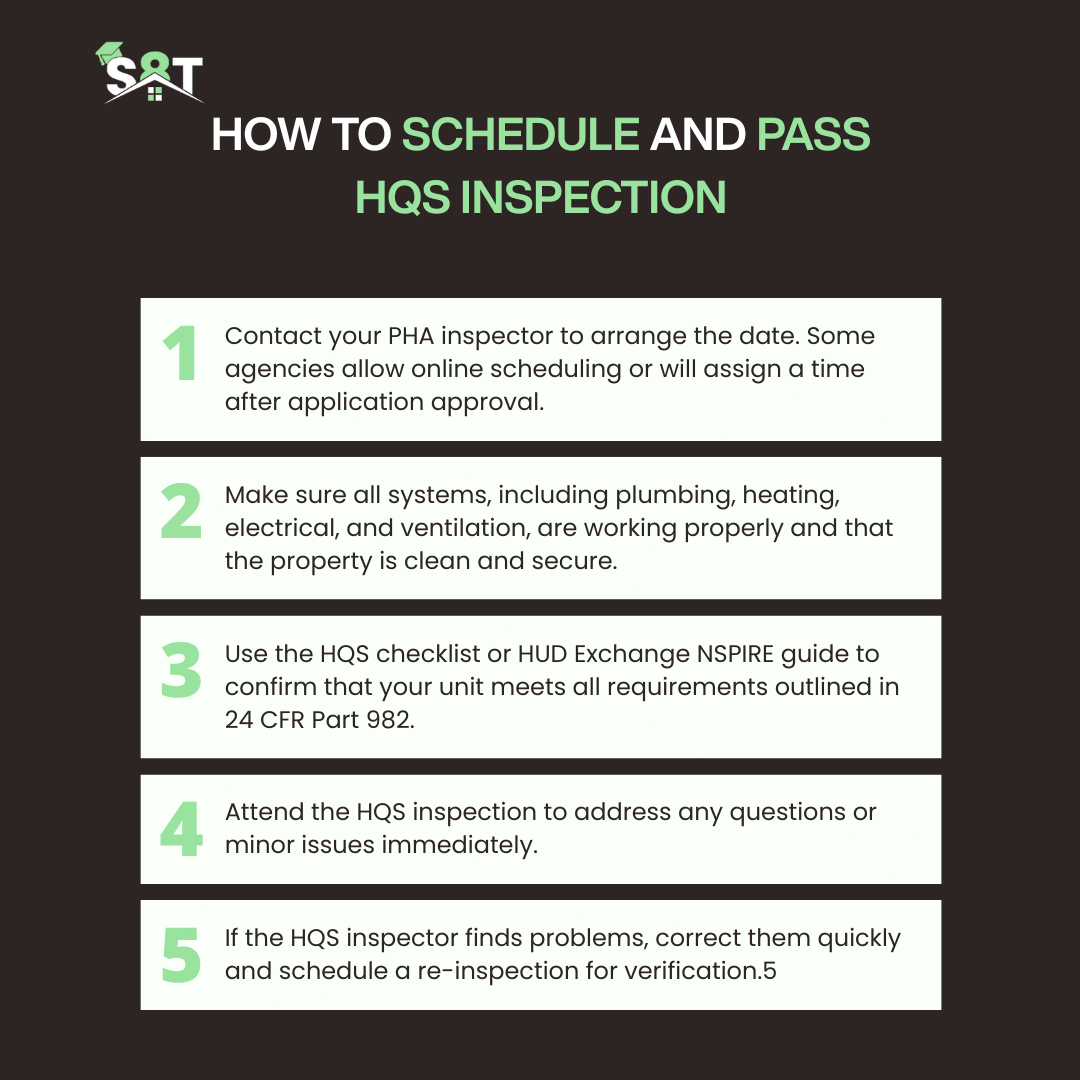
You can follow these 5 steps to schedule and pass the HQS inspection:
Common HQS failures include missing smoke detectors, broken locks, exposed wiring, and plumbing leaks. Conducting a self-inspection beforehand helps prevent delays and failed reports. Maintaining compliance ensures the unit remains eligible for HAP and avoids interruption of rent disbursements.
After your property passes inspection, you must set the rent that complies with HUD’s Fair Market Rent (FMR) guidelines and PHA rent reasonableness policies. This ensures the rental amount is fair, competitive, and consistent with local market conditions under the HCV Program.
5 steps to set a compliant rent amount on your Section 8 property:
Setting Section 8 rent within reasonable limits ensures compliance and speeds up the lease approval process. Keeping your rental price consistent with HUD’s rent reasonableness standards helps secure qualified tenants and ensures ongoing eligibility for Housing Assistance Payments (HAP) without interruptions.
Once the Public Housing Agency (PHA) approves your rent and tenant application, you must sign the Housing Assistance Payments (HAP) contract. This contract formalizes your participation in the Housing Choice Voucher (HCV) Program and establishes the payment terms between you, the PHA, and the tenant.
5 steps to sign the HAP contract and enroll successfully in the Section 8 program:
The HAP contract guarantees timely, taxpayer-funded payments directly from the PHA to the landlord. Staying compliant with all terms helps ensure steady income, positive tenant relationships, and uninterrupted participation in the Section 8 program.
After signing the Housing Assistance Payments (HAP) contract, you can begin marketing your property to qualified Section 8 voucher holders. Reaching the right audience ensures faster tenant placement and keeps your unit occupied under the HCV Program.
5 steps required for effective marketing of your property to HCV holders are:
Strong marketing builds visibility, attracts reliable tenants, and reduces vacancy time. A clear, accurate listing shows professionalism to both the PHA and voucher holders. By communicating promptly and maintaining HUD housing standards, landlords build trust, improve tenant retention, and sustain long-term rental profitability.
Landlords in the Housing Choice Voucher (HCV) Program must carefully screen potential tenants to ensure reliability and lease compliance. While the PHA verifies a tenant’s Section 8 eligibility, landlords are responsible for evaluating suitability for their property. Proper screening protects your investment, ensures HUD compliance, and supports stable tenancy.
6 core steps to screen Section 8 tenants include:
Strong tenant screening practices help identify responsible tenants who maintain the property and pay rent on time. Applying consistent, fair criteria ensures compliance with HUD guidelines and builds a reliable foundation for long-term success in the Section 8 program.
After the PHA approves your tenant, sign a lease agreement that complies with HUD and HCV Program requirements. The lease outlines rental terms, payment responsibilities, and property maintenance obligations for both parties. It must align with the HAP contract signed with the PHA.
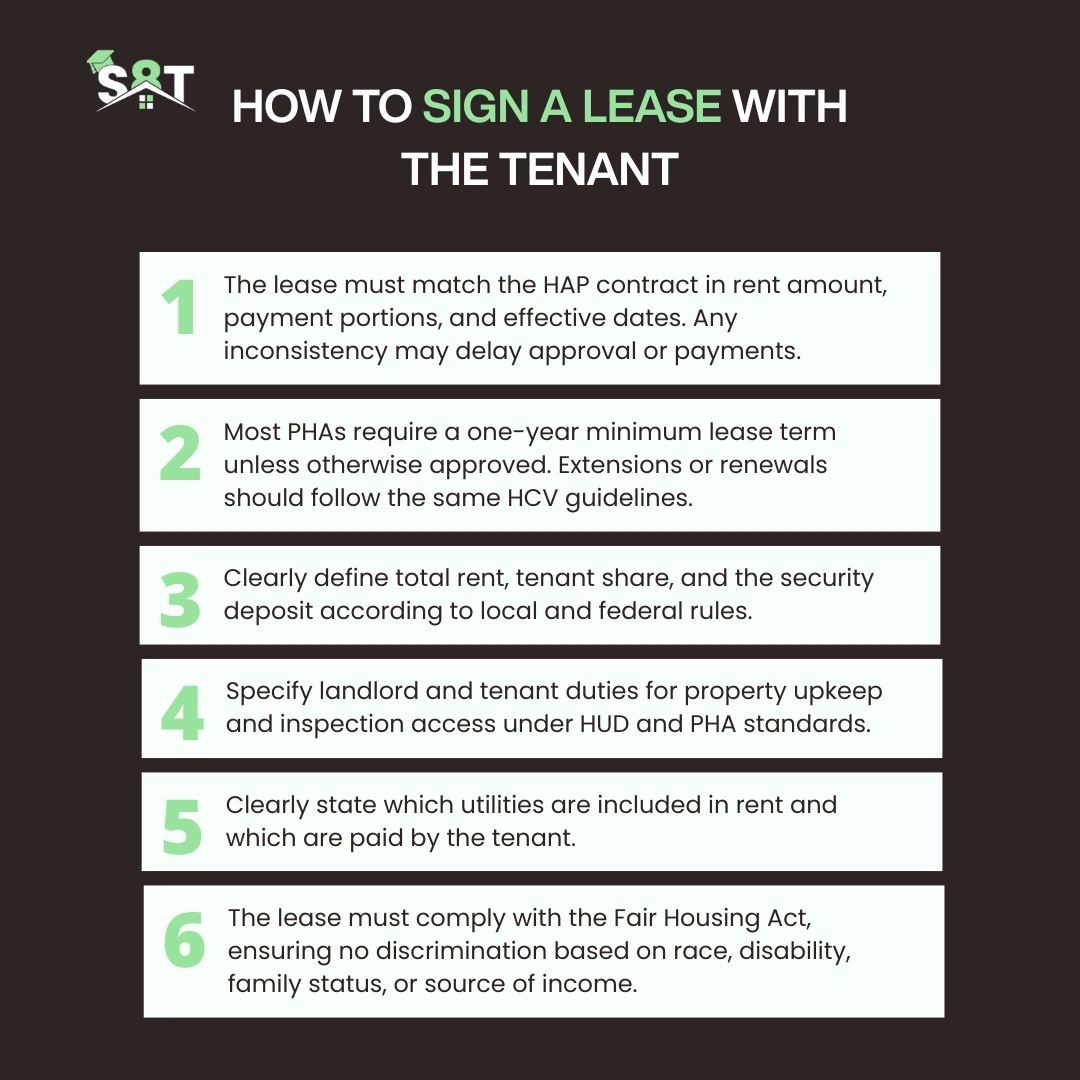
6 main things to consider before signing the tenant lease include:
A clear, compliant lease protects both parties and ensures the unit remains eligible for Housing Assistance Payments (HAP). Documenting terms in writing builds transparency, minimizes misunderstandings, and supports long-term success in the Section 8 program.
Under the Housing Choice Voucher (HCV) Program, landlords receive rent in two parts. One portion is paid by the Public Housing Agency (PHA) through Housing Assistance Payments (HAP), and the other comes directly from the tenant. The HAP portion is federally funded and guaranteed by the U.S. Department of Housing and Urban Development (HUD). This payment structure provides stability, timely rent, and lower financial risk for landlords.
Most PHAs use direct deposit for HAP payments, so landlords must keep their IRS W-9 form and bank information current to prevent delays. The tenant’s portion is paid directly to the landlord, usually monthly. Keeping accurate records of both PHA and tenant payments ensures compliance with HUD and PHA financial reporting requirements.
Many landlords rely on property management software or PHA online portals to track deposits, review payment statements, and verify income. If delays or errors occur, contacting the PHA promptly helps resolve them quickly. Maintaining organized records and clear communication supports consistent income and long-term success in the Section 8 program.
Investing in Section 8 housing offers landlords stable income and reliable tenants through the Housing Choice Voucher (HCV) Program. Rent payments are backed by HUD and processed by Public Housing Agencies (PHAs), ensuring predictable cash flow and lower financial risk. By keeping properties HUD-compliant and meeting inspection requirements, landlords can earn a steady income while supporting affordable housing in their communities.
With HUD’s NSPIRE standards and updated Housing Quality Standards (HQS) taking effect in 2026, this is the ideal time to prepare your property for participation in Section 8 Housing. A compliant, well-managed unit not only supports community housing goals but also enhances your credibility with PHAs and strengthens long-term profitability. For new landlords, completing a Section 8 training course can help you understand regulations, prepare for inspections, and confidently manage the program’s requirements for lasting success.
.svg)
Section 8 rental investing education for serious operators.


