



Investing in Section 8 properties offers real estate investors a reliable stream of government-backed rental income and long-term stability. Unlike traditional rentals, Section 8 housing provides guaranteed rent payments from qualified tenants. However, the success of these investments can vary significantly depending on the city, with factors like rental demand, property values, and local government programs playing a critical role.
The investment potential of Section 8 properties differs widely across cities due to variations in local market conditions. While some cities offer affordable property prices and high tenant demand, others present opportunities in growing markets with rising rents and stable economic conditions. The Price-to-Rent Ratio (PTR) is a key metric that helps Section 8 investors evaluate the balance between property costs and rental income potential.
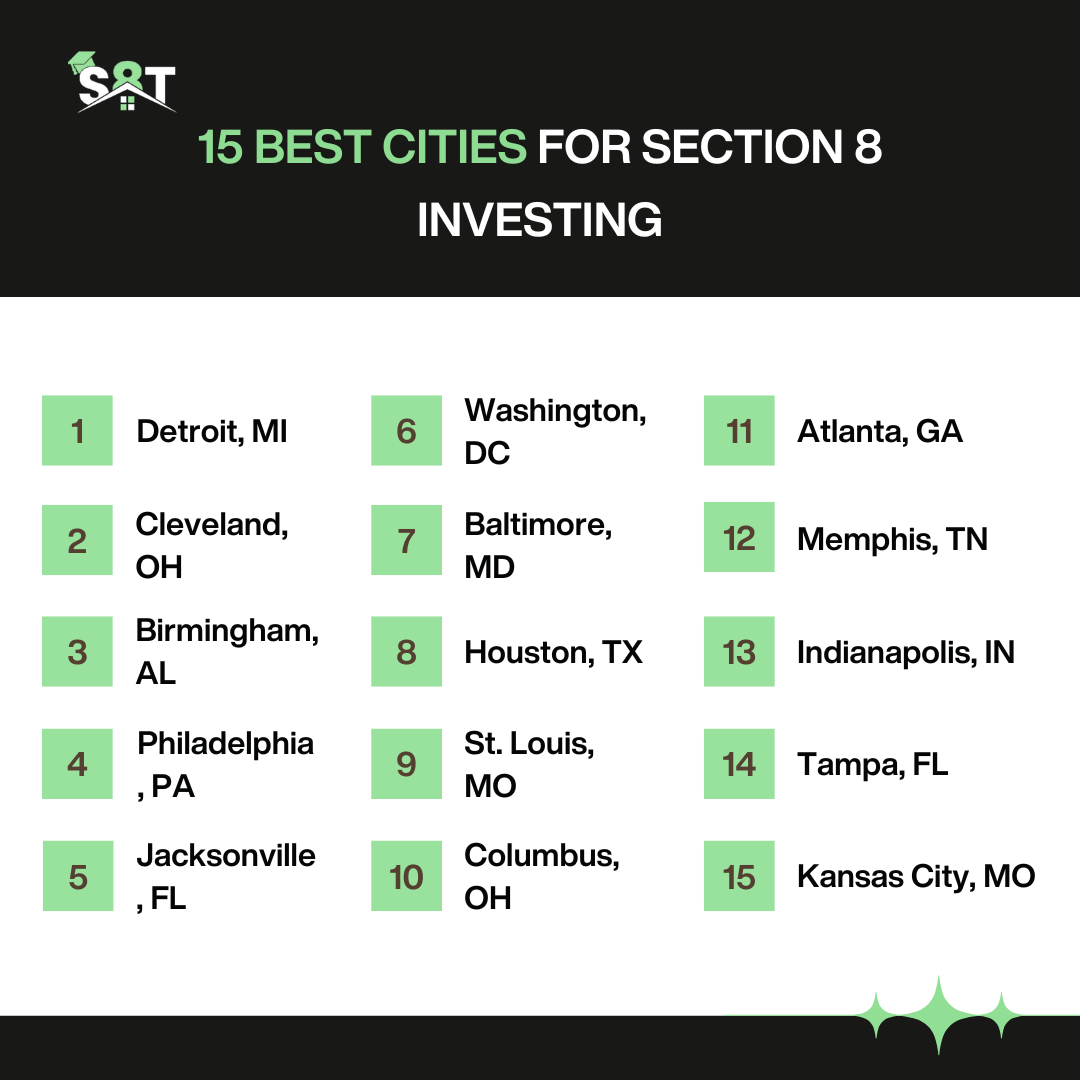
The 15 best cities for Section 8 investment are:
1. Detroit, MI
Detroit stands out for Section 8 investments, offering affordable housing and strong tenant demand. With an average home value of $76,340 and an average rent of $1,200, it’s an affordable market for Section 8 investors. Detroit’s population has been growing due to revitalization efforts, and its Price-to-Rent Ratio of 5.3 presents a great opportunity for stable rental income.
Property taxes in Detroit are relatively low, at around 2.4%, which helps keep investment costs down. However, the city faces challenges like high unemployment rates (9.80%) and crime (32.14 per 1,000 residents), which may affect tenant retention and property values. Despite these risks, the city’s consistent demand for affordable housing makes it a favorable market for Section 8 investors looking for long-term returns.
2. Cleveland, OH
Cleveland offers affordable real estate with a growing rental market, making it a strong candidate for Section 8 investments. With an average home value of $132,725 and an average rent of $1,150, Section 8 investors can acquire properties at low prices while ensuring steady rental income. The city's population is stable, and the Price-to-Rent Ratio of 9.6 shows strong rental potential.
Cleveland’s property tax rate is about 2.64%, slightly higher than the national average (1.02%), which may impact profitability. While the city is undergoing revitalization, there are risks related to crime (35.64 per 1,000 residents) and economic instability. However, the city’s affordable housing demand and strong rental market make it a promising location for Section 8 investors looking for affordable entry points and stable returns.
3. Birmingham, AL
Birmingham is an attractive city for Section 8 investments, offering affordable real estate and a growing rental market. With an average home value of $132,725 and an average rent of $1,150, Birmingham provides investors with a low-cost entry point. The city’s economy is expanding, with a Price-to-Rent Ratio of 9.6, indicating strong rental potential.
Property taxes in Birmingham are relatively low at around 1.0%, which helps improve cash flow for Section 8 investors. The city’s population is growing, driven by job opportunities and a lower cost of living. However, some risks include fluctuations in demand due to economic shifts and limited appreciation in property values. Despite these factors, Birmingham’s strong rental demand and affordable prices make it a solid market for Section 8 investments.
4. Philadelphia, PA
Philadelphia offers a large rental market and strong tenant demand, making it a top city for Section 8 investments. With an average home value of $228,621 and an average rent of $1,600, Philadelphia presents an opportunity for Section 8 investors seeking steady rental income. The city's population (1,573,916) is diverse, and its Price-to-Rent Ratio of 11.9 shows strong rental income potential.
Property taxes in Philadelphia are relatively high at about 1.39%, but the city's economy and strategic location on the East Coast help offset these costs. Risks include higher property prices and potential oversaturation in certain neighborhoods. Nevertheless, Philadelphia’s large tenant base and stable rental demand make it a strong market for Section 8 investors.
5. Jacksonville, FL
Jacksonville is a growing city for Section 8 investments, driven by a strong economy and high demand for affordable housing. With an average home value of $280,096 and an average rent of $1,600, Jacksonville presents a promising opportunity for investors seeking long-term growth and reliable rental income. Its Price-to-Rent Ratio of 14.6 reflects solid rental potential.
The property tax rate in Jacksonville is 0.9%, one of the lowest in the nation, which enhances cash flow. The city's population is steadily increasing due to its affordability and job opportunities, but risks include vulnerability to economic fluctuations and occasional hurricane damage. Despite this, Jacksonville’s growth and rental demand make it an ideal location for Section 8 investors.
6. Washington, DC
Washington, DC, offers a unique market for Section 8 investments, characterized by strong tenant demand and high rental prices. With an average home value of $572,823 and an average rent of $2,500, the city presents a higher entry cost, but with potential for high returns. Its Price-to-Rent Ratio of 19.1 reflects a competitive rental market.
Washington’s property tax rate is about 0.85%, which is relatively low given the high property values. The city’s population (702,250) is large and consistently growing due to its status as the nation’s capital. Risks include high property prices and the challenge of dealing with high turnover rates. Nevertheless, the city’s steady rental income and economic stability make it an attractive location for Section 8 investors.
7. Baltimore, MD
Baltimore offers an ideal market for Section 8 investments with affordable property prices and a diverse rental market. With an average home value of $186,123 and an average rent of $1,600, Baltimore presents a balanced investment opportunity. The city’s population (568,271) continues to grow, and its Price-to-Rent Ratio of 9.7 ensures strong rental income potential.
The property tax rate in Baltimore is about 2.248%, which is on the higher side, but the city’s stable economy and strong rental demand help mitigate this cost. Baltimore’s proximity to Washington, DC, enhances its market stability, but risks include fluctuations in property values and potential crime concerns. Despite these challenges, Baltimore remains an attractive market for Section 8 investors seeking reliable cash flow and long-term growth.
8. Houston, TX
Houston offers a thriving economy, strong population growth, and high demand for affordable housing, making it a prime location for Section 8 investments. With an average home value of $261,052 and an average rent of $1,900, Houston provides solid rental income potential. The city’s Price-to-Rent Ratio of 11.5 reflects a favorable market for investors.
Houston’s property tax rate is approximately 0.624%, which is lower than the national average, benefiting investors by supporting better cash flow. The city’s strong job market and affordable cost of living continue to drive consistent demand for Section 8 housing. While risks include exposure to fluctuations in oil prices and potential flooding from hurricanes, Houston’s economic growth and affordable housing market make it an excellent choice for Section 8 investors.
9. St. Louis, MO
St. Louis presents a favorable market for Section 8 investments, with affordable property prices and strong rental demand. With an average home value of $179,683 and an average rent of $1,210, St. Louis offers an affordable entry point for investors. The city’s stable population growth and Price-to-Rent Ratio of 12.4 ensure consistent rental income.
With a property tax rate of around 1.33%, St. Louis stands as a reasonable city for Section 8 investors looking to maximize cash flow. The city's demand for affordable housing continues to rise, but risks include economic instability and crime in certain neighborhoods (4.817 per 1,000 residents). Despite these challenges, St. Louis remains an attractive market for Section 8 investors seeking long-term stability and reliable returns.
10. Columbus, OH
Columbus offers a strong market for Section 8 investments, with a growing population and a diverse rental market. With an average home value of $242,640 and an average rent of $1,495, Columbus presents a balanced opportunity for investors seeking rental income. The city’s expanding tech sector and steady job growth support high demand for affordable housing, reflected by a Price-to-Rent Ratio of 13.5.
The median effective property tax rate in Columbus is approximately 1.86%, which is manageable for Section 8 investors. The city’s population growth (2025 population: 933,263) and consistent rental demand make it an attractive market for Section 8 investments. Risks include potential oversupply in certain areas and the city's reliance on industry growth. Nevertheless, Columbus remains a prime location for long-term, profitable investments.
11. Atlanta, GA
Atlanta is a top city for Section 8 investments, offering a growing population, thriving economy, and high demand for affordable housing. With an average home value of $384,900 and an average rent of $2,045, Atlanta provides investors with a lucrative market for high rental income. The city’s economic expansion, particularly in tech and logistics, drives demand for rental housing, with a Price-to-Rent Ratio of 15.7.
The property tax rate of Atlanta is 1.0%, making it favorable for Section 8 investors looking to maximize cash flow. The city's population growth (520,070 at a 1.34% growth rate) and strong job market provide stability for Section 8 tenants, but risks include rising property prices and potential neighborhood gentrification. Despite these challenges, Atlanta’s economic growth and rental demand make it an attractive market for Section 8 investors.
12. Memphis, TN
Memphis offers an attractive market for Section 8 investments with affordable property prices and strong tenant demand. With an average home value of $143,363 and an average rent of $1,250, Memphis provides an affordable entry point for investors. The city's population growth and stable demand for affordable housing reflect a Price-to-Rent Ratio of 11.4, ensuring strong rental income potential.
Memphis’ property tax rate is about 2.58%, which is reasonable for Section 8 investors. The city’s steady population growth and demand for affordable housing make it a prime location for Section 8 investments. Risks include occasional crime (65.28 per 1,000 residents) and economic instability, but these factors are mitigated by Memphis’s steady demand for affordable housing and government-backed rent payments.
13. Indianapolis, IN
Indianapolis offers strong opportunities for Section 8 investments, with steady population growth and a stable economy. With an average home value of $226,477 and an average rent of $1,494, Indianapolis provides a solid foundation for real estate investors. The city's growing tech sector and business-friendly environment contribute to a strong demand for rental properties, reflected by a Price-to-Rent Ratio of 12.6.
Property taxes in Indianapolis are about 1.0%, which is favorable for Section 8 investors. The city’s consistent growth and demand for affordable housing make it an attractive location for Section 8 investments. Risks include potential market saturation in certain areas, but Indianapolis remains a prime city for long-term Section 8 investors seeking stable returns.
14. Tampa, FL
Tampa is an ideal city for Section 8 investments, with a strong economy, high population growth, and high demand for affordable housing. With an average home value of $368,151 and an average rent of $2,096, Tampa presents strong rental income potential. The city's expanding job market, particularly in healthcare and finance, ensures steady demand for rental properties, reflected by a Price-to-Rent Ratio of 14.6.
What sets Tampa, located in Hillsborough County, apart is its median effective property tax rate of about 1.27%, which supports favorable cash flow for Section 8 investors. While the city's growth and strong rental market provide stability, rising property values and potential market volatility are risks to consider. Still, Tampa’s growing economy and rental demand make it a prime location for Section 8 investments with long-term potential.
15. Kansas City
Kansas City offers a strong rental market with growing demand for affordable housing, making it an attractive city for Section 8 investments. With an average home value of $241,960 and an average rent of $1,350, it provides a cost-effective entry point for investors. The city’s diverse economy and population growth contribute to the demand for affordable housing, reflected in a Price-to-Rent Ratio of 12.4.
The property tax rate of 1.34% in Kansas City allows Section 8 investors to maintain a solid cash flow. While the city offers a stable rental market, potential risks such as economic fluctuations and changes in neighborhood dynamics should be considered. Nevertheless, Kansas City’s affordability and strong rental demand make it a promising option for Section 8 investors seeking long-term growth.
What are the Factors that Make Cities Section 8–Investing Friendly?
Factors that contribute to making a city suitable for Section 8 investment are stable rental income, efficient housing authorities, strong market fundamentals, a supportive local environment, and reduced vacancy rates. These factors directly impact your investment’s profitability, as they ensure steady cash flow, minimize risks, and long-term growth potential.
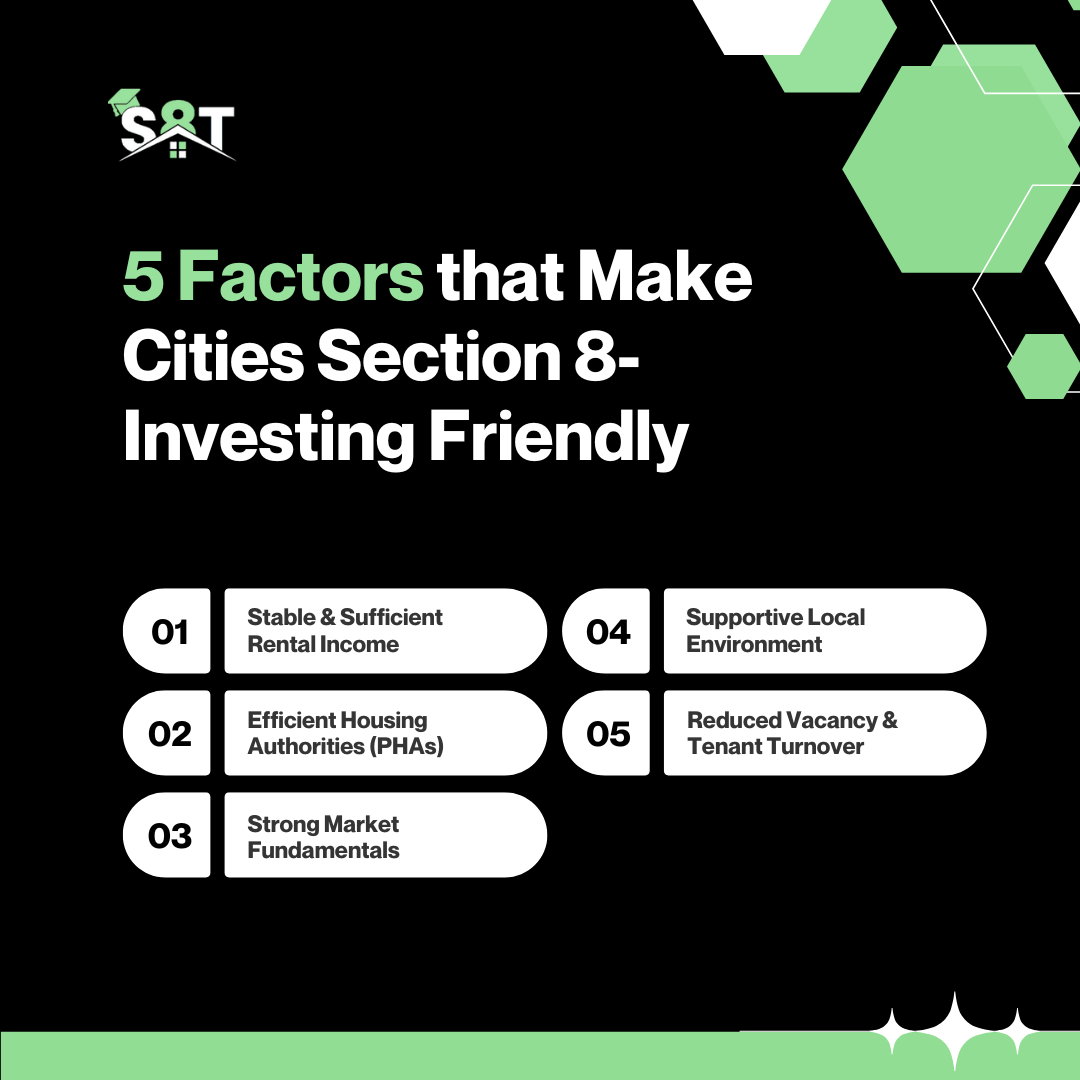
5 factors that make cities Section 8-investing friendly are:
- Stable & Sufficient Rental Income
Look for cities where rental demand is high, and rents remain consistent over time. A strong rental income stream is crucial for Section 8 investors, as it ensures reliable cash flow from tenants who are backed by government subsidies, making the investment less vulnerable to economic downturns.
- Efficient Housing Authorities (PHAs)
Select cities with well-organized PHAs that process applications quickly, maintain positive relationships with landlords, and ensure timely rent payments. Efficient PHAs reduce administrative hassles and improve the overall investment experience, ensuring smoother operations for property owners.
- Strong Market Fundamentals
Cities with growing populations, a diverse economy, and stable employment opportunities tend to have high tenant demand for Section 8 housing, leading to consistent rent payments. A strong housing market ensures property values appreciate over time, offering both rental income and potential long-term capital gains.
- Supportive Local Environment
Choose cities where local governments support affordable housing initiatives and implement landlord-friendly policies. Low regulation barriers, tax incentives, and a cooperative local government contribute to a healthy investment environment, allowing Section 8 investors to maximize returns with minimal friction.
- Reduced Vacancy & Tenant Turnover
Cities with low vacancy rates and high tenant retention create a stable cash flow for Section 8 investors. Areas with a steady flow of income-qualified tenants and strong neighborhood stability are less likely to experience frequent turnover, helping to keep operational costs low and reducing risks of income gaps.
How to Choose the Right City for Your Section 8 Investment?
To choose the right city for Section 8 investment, focus on areas with stable rental income and strong demand for affordable housing. Cities with growing populations and diverse economies ensure consistent cash flow. Pay attention to the Price-to-Rent Ratio (PTR), as favorable PTR cities allow for affordable property acquisition and solid rental returns.
Equally important is selecting cities with efficient Housing Authorities (PHAs) for timely rent payments and smooth operations. Look for areas with low property taxes, landlord-friendly policies, and low vacancy rates to ensure steady cash flow. For proper guidance on these factors and to make informed decisions, taking a Section 8 training course can provide valuable insights and strategies. This training helps Section 8 investors navigate the complexities of the Section 8 program, maximizing returns and minimizing risks.

.svg)


