
Section 8 investing refers to purchasing rental properties that participate in the Housing Choice Voucher (HCV) program, commonly known as Section 8, where tenants receive government assistance to help pay their rent. The program ensures guaranteed rental income for Section 8 landlords, with the government typically covering around 70% of the rent, reducing the risk of missed payments. This provides a steady cash flow for landlords while offering affordable housing options to low-income tenants.
To become an eligible Section 8 landlord, investors must ensure their properties meet Housing Quality Standards (HQS) set by the Public Housing Authority (PHA) and submit the required documentation. Landlords also need to sign Housing Assistance Payment (HAP) contracts with the PHA, ensuring they receive monthly payments directly from the government. Additionally, it is crucial to understand local PHA regulations, the Fair Market Rent (FMR) for the area, and how tenant eligibility is determined.
Successful Section 8 investing involves understanding best practices, such as tenant screening, maintaining consistent property standards, and ensuring regular inspections. Building strong relationships with the PHA and having a clear exit strategy are essential for long-term profitability, making Section 8 housing a stable and reliable investment option.
Investing in Section 8 housing offers benefits like guaranteed rental income, low vacancy rates, long-term tenants, and potential tax advantages. The government covers around 70% of the tenant’s rent and utilities through housing vouchers, ensuring consistent payments via HAP contracts. Section 8 landlords and investors can also take advantage of tax incentives like the Low-Income Housing Tax Credit (LIHTC), and may qualify for funding or support through Housing Finance Authorities. These factors make Section 8 a reliable and attractive investment, particularly in areas with high demand for affordable housing.
Advantages of investing in Section 8 housing include stable rental income, reduced vacancy rates, and long-term lease terms. The government covers a portion of the rent through HCV, ensuring consistent payments via HAP contracts, which significantly improves cash flow stability and reduces financial risk. Beyond the financial benefits, Section 8 investments help meet the growing need for affordable housing, positively impacting communities by providing safe, stable living options for low-income families and contributing to the revitalization of D-class neighborhoods.
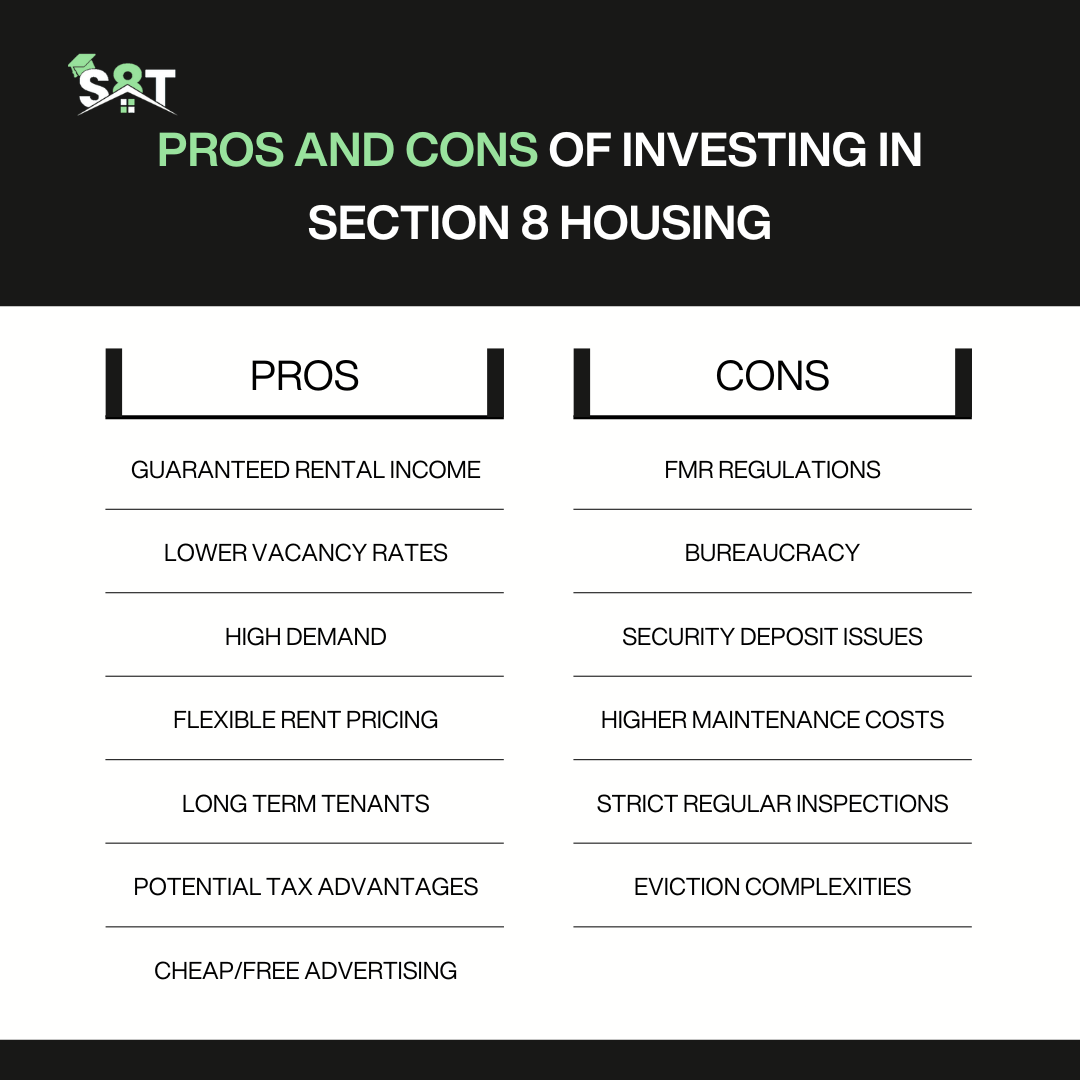
7 core benefits of investing in Section 8 housing are as follows:
One of the key benefits of investing in Section 8 is guaranteed rental income, with the government covering about 70% of rent and utilities through housing vouchers, ensuring regular payments. HAP contracts provide consistent cash flow, minimizing missed payments and offering stability compared to market-rate properties. This setup provides financial security, even during economic downturns or tenant instability.
Section 8 housing often leads to lower vacancy rates due to the high demand for affordable housing. Since the government guarantees a portion of the rent through housing vouchers, Section 8 landlords have access to a steady pool of tenant applicants, reducing the time a property sits vacant. Additionally, the program attracts long-term tenants, further minimizing turnover and ensuring more consistent occupancy.
The demand for Section 8 housing remains consistently high, driven by the need for affordable rental options. Many low-income families rely on government housing vouchers, which makes these properties attractive to a steady pool of tenant applicants. This strong demand ensures Section 8 landlords can maintain high occupancy rates and reduce the risks associated with vacant properties.
Another advantage of Section 8 housing is the ability to set flexible rent prices within the limits of the Fair Market Rate (FMR). With the U.S. Department of HUD paying around 70% rent through HCV, Section 8 landlords can adjust rents based on local market conditions while maintaining affordability for tenants. This flexibility helps investors optimize their rental income while ensuring their properties remain accessible.
With Section 8 housing, landlords often benefit from long-term tenants, as the program provides stable rental assistance through housing vouchers. The HUD’s contribution to rent makes tenants more likely to stay in their homes for extended periods, reducing turnover rates. This long-term stability minimizes the costs and time associated with finding new tenants, offering a more consistent cash flow for investors.
Section 8 landlords may benefit from tax advantages such as the Low-Income Housing Tax Credit (LIHTC), which helps offset costs associated with maintaining affordable housing. Additionally, landlords can deduct operating expenses, such as property maintenance and management fees, increasing the financial efficiency of their investments while providing affordable housing options.
Properties listed under Section 8 enjoy built-in advertising through local Public Housing Authorities (PHA), which assist in matching landlords with eligible tenants. This often translates to cheap or free advertising, as PHAs post available units on government websites or community boards, eliminating the need for expensive marketing strategies.
The downside of investing in Section 8 housing includes bureaucracy, strict adherence to Housing Quality Standards (HQS), and potential higher maintenance costs. Landlords must also deal with red tape, frequent property inspections, and the complexities of tenant management and evictions, which can be more challenging compared to market-rate rentals.
6 disadvantages that the new investors in Section 8 housing should know are:
Section 8 landlords are often limited by Fair Market Rate (FMR) regulations, which cap the rent they can charge based on the FMR for their area. While these regulations help keep housing affordable, they may reduce rental income, especially in high-demand areas where market rents are higher than the FMR. Landlords must adjust their pricing to comply with these limits to participate in the program.
Another drawback of Section 8 investing is the bureaucracy involved, as landlords must navigate complex government processes and paperwork. This includes submitting Request for Tenancy Approval (RFTA) forms, passing Housing Quality Standards (HQS) inspections, and ensuring compliance with various regulations. These administrative requirements can lead to delays and frustration, especially for those new to the program.
Because housing vouchers do not cover security deposits, Section 8 landlords often face difficulties when tenants lack the funds to pay the full deposit upfront. While the PHA covers about 70% of the rent, tenants are typically responsible for the entire security deposit, which can lead to delays in securing tenants if they cannot afford it. This lack of funds for the deposit can create cash flow challenges for Section 8 landlords, impacting the speed of property turnover.
Section 8 landlords often face higher maintenance costs due to the need to comply with the Housing Quality Standards (HQS) set by the PHA. These housing standards require properties to be regularly inspected and maintained in excellent condition, which can lead to increased repair and upkeep expenses. Older properties, or those in D-class neighborhoods, may require more frequent upgrades to meet these standards, adding to the overall maintenance burden.
To qualify and maintain eligibility for Section 8, landlords must pass strict regular inspections conducted by the Public Housing Authority (PHA), typically once a year. If the property does not meet the Housing Quality Standards (HQS), landlords must make necessary repairs, or the PHA will stop providing the subsidy. This can cause delays in tenant turnover and may require landlords to refill the unit quickly, which could result in additional costs for maintenance or vacancy periods.
There are eviction complexities for Section 8 landlords due to the legal protections provided to tenants under the Housing Choice Voucher (HCV) program. The eviction process is often more time-consuming, as landlords must follow procedures set by the PHA and ensure compliance with Fair Housing Act regulations. Tenants also have access to public-funded attorneys, which can delay the process and make it more difficult for landlords to regain control of the property.
To become an eligible Section 8 landlord, the property must meet Housing Quality Standards (HQS), the landlord must provide proper documentation, and comply with PHA regulations. A rent agreement must be in place, tenant screening must follow program rules, and the landlord must maintain the property.
6 main eligibility criteria for becoming a Section 8 landlord are as follows:
To qualify as a Section 8 landlord, the property must meet Housing Quality Standards (HQS), which ensure the unit is safe, sanitary, and in good repair. This includes meeting requirements for plumbing, heating, electrical systems, and overall structural integrity. Regular property inspections by the PHA ensure compliance with these housing standards.
Section 8 landlords must provide proof of ownership, valid identification, and a completed Request for Tenancy Approval (RFTA) form to participate in the Section 8 program. These documents are submitted to the PHA for approval, ensuring that the property meets the program's standards and the landlord is eligible to receive rental assistance payments.
Section 8 landlords must create a valid rent agreement that outlines the lease terms, including rent amounts, payment methods, and tenant responsibilities. The agreement must comply with PHA regulations and confirm that the property meets housing standards. Both the landlord and tenant must agree to the terms, ensuring compliance with the Section 8 program.
To participate in Section 8, landlords must ensure ongoing compliance with the rules set by the Public Housing Authority (PHA) and the Housing Choice Voucher (HCV) program. This includes following Housing Quality Standards (HQS), adhering to tenant screening guidelines, and maintaining the property in accordance with program requirements. Non-compliance can lead to the loss of eligibility for rental assistance or removal from the program.
Section 8 landlords must conduct tenant screening to ensure that tenants meet the eligibility requirements of the Housing Choice Voucher (HCV) program. This includes checking criminal background, verifying income, and confirming that the tenant holds valid housing vouchers. Effective screening ensures compliance with PHA regulations and helps maintain property standards.
For Section 8 landlords, maintenance is essential to ensure the property meets HQS set by the PHA. Landlords must maintain the property in good condition, including plumbing, electrical systems, and safety features, to pass regular property inspections. Failing to meet these standards can result in the loss of housing assistance payments (HAP) and removal from the program.
To buy Section 8 housing, investors must understand the local real estate market, PHA regulations, and HCV system, find suitable properties, perform due diligence, navigate the buying process, and ensure ongoing compliance with HQS. Each step involves ensuring the property qualifies for Section 8 and is positioned for long-term success within the program. Careful planning and adherence to these steps will help investors maximize rental income and reduce potential risks.
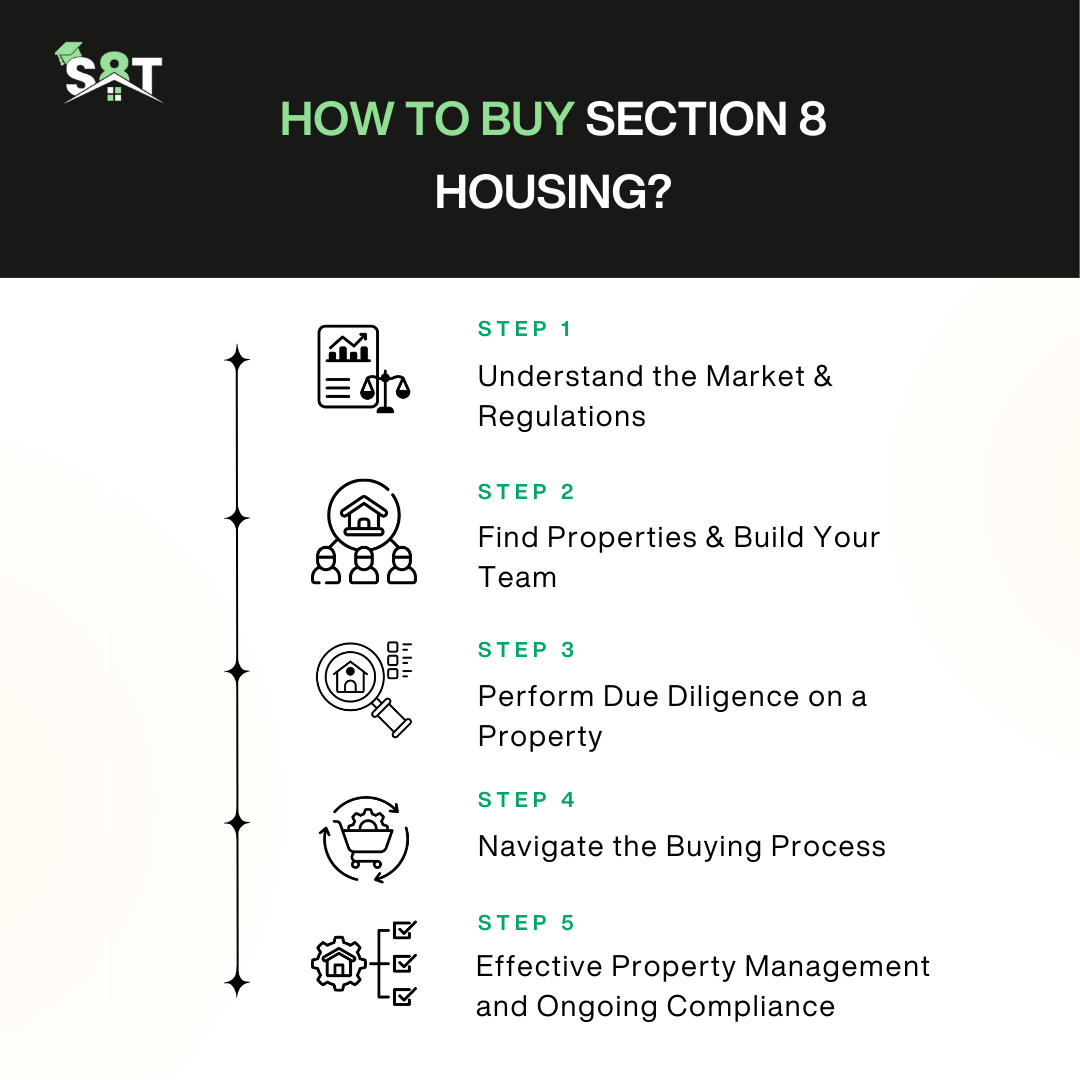
While buying Section 8 housing, investors must understand the local real estate market and the regulations specific to the Housing Choice Voucher (HCV) program. This includes familiarizing themselves with PHA regulations, Fair Market Rents (FMR), and HQS that the property must meet. Understanding tenant eligibility requirements and how housing vouchers work is also essential for ensuring that the property qualifies for the program and attracts reliable tenants.
The next step to buy Section 8 housing includes identifying properties that meet HQS and are located in areas with a high demand for affordable housing. Building a reliable team is crucial, including working with a real estate agent experienced with Section 8 properties, a property manager (PM) to handle ongoing maintenance and tenant relations, and a real estate attorney to assist with legalities and program compliance. Having a strong team in place will help ensure a smooth process and long-term success.
Before purchasing Section 8 housing, investors must conduct detailed due diligence to ensure the property is eligible for the program and meets all Housing Quality Standards. This includes inspecting the property’s condition, identifying any required repairs or upgrades, and verifying compliance with PHA regulations. Investors should also assess the local market, tenant demand for affordable housing, and the financial potential of the property to ensure a profitable return on investment (ROI).
To buy Section 8 housing, investors must navigate the typical property purchasing process, which includes securing financing, making an offer, and completing necessary inspections. It is important to ensure that the property complies with HQS before finalizing the purchase. Additionally, investors should work closely with a real estate attorney to ensure all contracts and documentation comply with PHA regulations and other legal requirements related to Section 8.
Effective property management is essential after purchasing Section 8 housing to maintain compliance with HQS and ensure continued eligibility for housing assistance payments (HAP). Landlords must conduct regular property inspections, address maintenance issues promptly, and manage tenant relationships in line with PHA regulations. Ongoing compliance ensures the property remains in good standing and continues generating steady rental income.
To become a Section 8 landlord, contact your local Public Housing Authority (PHA), submit required paperwork, ensure your property meets Housing Quality Standards (HQS), and market your property to eligible tenants. After your property passes inspection, you will market it to eligible tenants through the PHA's listings and other local resources. Once you officially become a Section 8 landlord, you need to secure a tenant, sign contracts with the PHA, and begin receiving housing assistance payments (HAP) directly from the government.
Follow these 5 steps to become a Section 8 landlord:
Becoming a Section 8 landlord starts with contacting your local PHA to get detailed information about the program in your area. This includes learning the eligibility criteria, HQS, and the property approval process. The PHA will guide you through the application process, explain the necessary documentation, and provide you with information on how the housing voucher system works in your local market.
After contacting the local PHA, submit documents such as proof of property ownership, tax identification, and a completed Request for Tenancy Approval (RFTA) form to begin the process of becoming a Section 8 landlord. The PHA will review your submission, ensuring that your property meets Housing Quality Standards (HQS) and complies with local regulations before moving forward with approval.
Once the PHA approves your paperwork, market your property to eligible Section 8 tenants in your area. The PHA often helps by listing available Section 8 units on their website or in local community resources. As a landlord, you can also advertise through local newspapers, online platforms, or community bulletin boards to reach tenants who qualify for housing vouchers. Effective marketing will help you attract reliable tenants and fill your property quickly.
To become a Section 8 landlord, your property must pass a property inspection conducted by the PHA to ensure it meets HQS. The inspection will check the condition of essential systems, such as plumbing, electrical, and heating, as well as safety features such as smoke detectors and structural integrity. If any issues are found, you will need to address them before your property can be approved for Section 8 tenants.
Once your property passes inspection, you will need to sign contracts with the PHA, including a HAP contract that outlines the rental terms and payment responsibilities. After signing the contract, the PHA will begin sending housing assistance payments (HAP) directly to you, covering about 70% of the rent paid by the U.S. government. You will also be responsible for collecting the tenant’s portion of the rent, as agreed in the lease agreement.
Section 8 typically covers around 70% of the rent, with the tenant responsible for the remaining 30% based on their income. The exact amount the government will pay depends on the tenant's income, family size, and local Fair Market Rent (FMR) standards set by the Public Housing Authority (PHA).
Here is an example of how the rent payment works:
Section 8 landlords receive HAP payments directly from the government, and the tenant's portion of the rent is paid directly to the landlord by the tenant. Landlords must understand that PHAs have payment standards for each area, which determine the maximum amount the government will contribute toward rent. If the rent exceeds the FMR for the area, the landlord can either negotiate with the tenant or lower the rent to comply with program limits.
To succeed in Section 8 housing investing, landlords should research the local market, choose the right location, and fully understand HUD/PHA rules to ensure compliance. It is also important to screen tenants thoroughly, prepare for and pass inspections, and maintain the property consistently. Building strong relationships with the PHA and having a clear exit strategy will further contribute to long-term success.
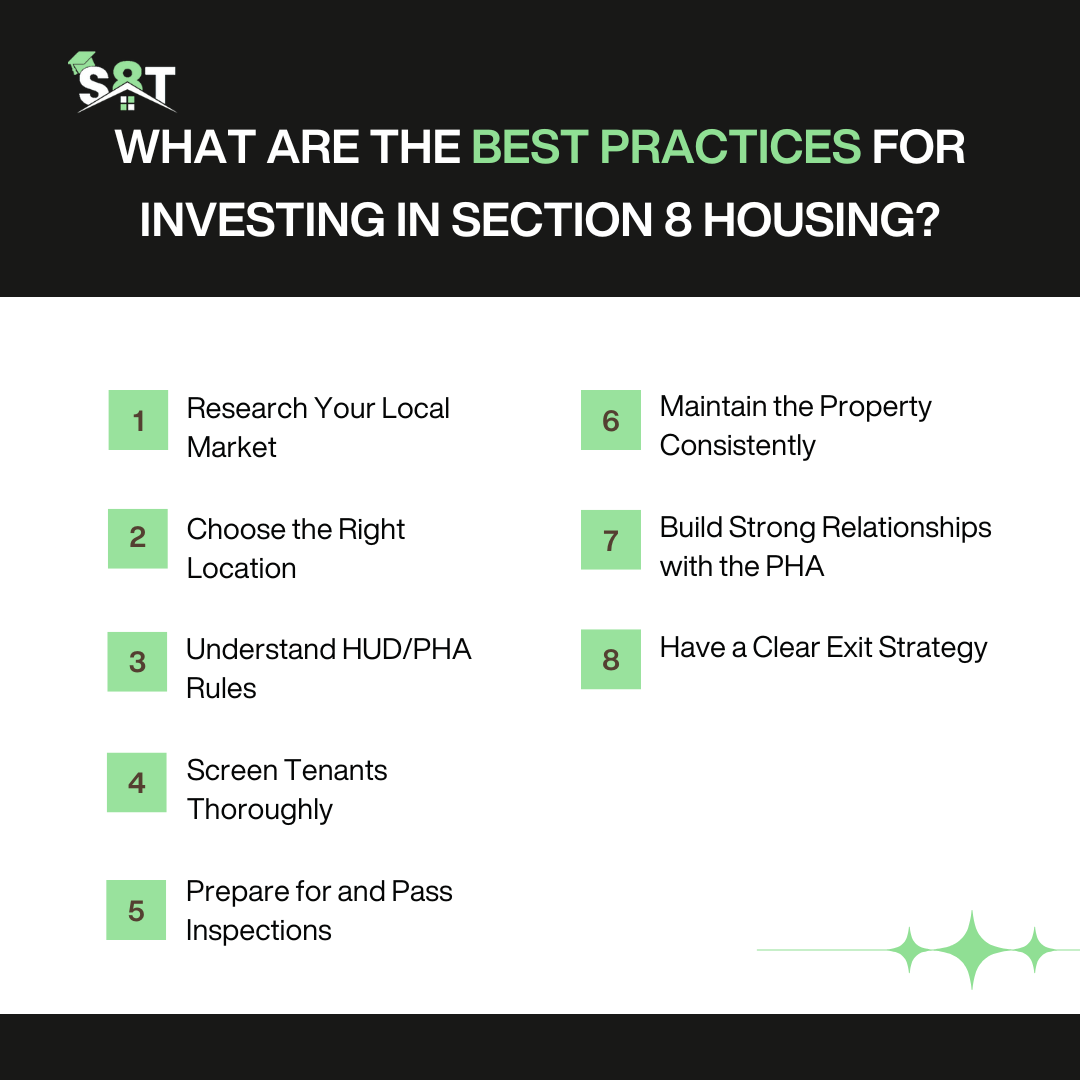
Below are the 8 best industry practices to achieve success in Section 8 housing investment:
When investing in Section 8 housing, you must understand the Fair Market Rent (FMR) in your area, as well as local tenant demographics and demand for affordable housing. Pay attention to factors like neighborhood stability, proximity to schools, public transportation, and crime rates. These insights will help you choose a high-demand location and ensure long-term success in rental income and tenant retention.
Selecting the right location of Section 8 housing involves evaluating factors like tenant demand for affordable housing, access to public transportation, proximity to schools, grocery stores, and other essential amenities. Look for “opportunity areas” with stable economies, low crime rates, and high tenant retention rates, as these neighborhoods are more likely to offer steady rental income and long-term investment growth.
To succeed as a Section 8 landlord, you must understand the HUD regulations, PHA guidelines, and the Housing Quality Standards (HQS) rules, tenant eligibility, and tenant screening under the Housing Choice Voucher (HCV) program. This includes knowing the Fair Market Rent (FMR) limits, how the PHA determines tenant portions of rent, and your responsibilities for property inspections. Understanding these rules will help you stay compliant, avoid penalties, and ensure your property’s eligibility for HAP.
Section 8 landlords should conduct a thorough tenant screening to select eligible, reliable tenants. This includes checking for criminal background, verifying income to ensure the tenant meets PHA income guidelines, and confirming that the tenant holds a valid housing voucher. Landlords should also assess tenant rental history and ensure compliance with PHA tenant screening criteria to avoid issues and ensure long-term tenancy.
To ensure your property’s eligibility for Section 8, prepare for and pass regular inspections conducted by the PHA. These property inspections ensure that your property meets HQS, including safety, plumbing, electrical systems, and overall structural integrity. Proper maintenance, timely repairs, and keeping the property in good condition will help you pass inspections smoothly and avoid delays in rental assistance payments.
Consistent maintenance is crucial for Section 8 landlords to ensure the property continues to meet Housing Quality Standards and remains eligible for housing assistance payments. Regular inspections, timely repairs, and routine upkeep of plumbing, electrical, and safety systems will help avoid inspection failures and improve tenant satisfaction. A well-maintained property also ensures compliance with PHA regulations, reducing potential risks and increasing tenant retention.
Establishing strong relationships with the PHA helps Section 8 landlords navigate the program efficiently. Regular communication with your PHA ensures the timely resolution of potential issues quickly, such as property inspections, tenant eligibility, and HAP. A positive working relationship ensures smoother interactions and keeps you informed of any updates or changes to HUD regulations or local policies.
Section 8 landlords should have a clear exit strategy to manage the long-term direction of their investment. Whether you plan to sell the property, transition to different real estate investments, or exit the Section 8 program, pre-planning helps you make informed decisions. A solid exit strategy ensures you understand the financial implications, comply with PHA regulations, and are prepared for tenant transitions or shifts in the housing market.
The best states to invest in Section 8 housing include Texas, Florida, Tennessee, Ohio, Alabama, Indiana, Georgia, Missouri, North Carolina, Pennsylvania, and Arizona. A great demand for low-income tenants requiring affordable housing, relatively low property costs, and strong local PHA programs places them among the best states to invest in for Section 8.
Texas is a prime state for Section 8 investing, with cities like Houston, Dallas, and San Antonio offering a high demand for affordable housing. The median rent in Texas is approximately $1,875, with property prices averaging $296,039, making it a cost-effective choice for investors. The price-to-rent ratio is favorable, offering rental yields of about 7.6%. While Texas offers strong economic growth, investors should consider risks such as hurricane damage in coastal areas and potential market fluctuations in rapidly expanding cities.
Florida offers a strong market for Section 8 housing, especially in cities like Miami, Orlando, and Tampa. The median rent in Florida is about $2,332, and property prices average around $372,356, making it an attractive option for investors. With a price-to-rent ratio yielding around 7.5%, Florida provides solid rental returns. However, investors should be aware of risks like hurricane season and higher property insurance costs, particularly in coastal regions.
Tennessee is an excellent state for Section 8 investing, with cities like Nashville, Memphis, and Knoxville offering strong demand for affordable housing. The average rent in Tennessee is $1,695, and the average home value is $326,998, making it a reasonably priced market for investors. Tennessee also offers a favorable price-to-rent ratio, with rental yields around 6%. However, investors should be mindful of risks like economic fluctuations in certain cities and the potential for property value volatility in rapidly growing areas.
Ohio presents a great opportunity for Section 8 investors, especially in cities like Cleveland, Columbus, and Cincinnati, where affordable housing demand is steady. The average rent in Ohio is $1,319, and the average home value is $236,963, making it an affordable market for investors. With a price-to-rent ratio offering rental yields around 6.6%, Ohio remains an attractive investment option. However, investors should consider risks such as economic shifts in certain areas and the need for investment in older housing stock.
Alabama is an appealing state for Section 8 investments, especially in cities like Birmingham, Montgomery, and Huntsville. The average rent in Alabama is $1,406, and the average home value is $231,050, making it an affordable market for investors. With a favorable price-to-rent ratio yielding rental returns of around 7%, Alabama provides solid returns. However, investors should consider risks like economic dependence on certain industries and the potential for property depreciation in more rural regions.
Indiana is an attractive state for Section 8 investors, with cities like Indianapolis, Fort Wayne, and Evansville showing strong demand for affordable housing. The average rent in Indiana is $1,400, and the average home value is $248,414, offering a reasonable entry point for investors. With a favorable price-to-rent ratio, rental yields typically range around 6-7%. Investors should be aware of potential risks like economic shifts in smaller cities and areas with fluctuating property values.
Georgia offers a promising market for Section 8 investments, especially in cities like Atlanta, Savannah, and Augusta. The average rent in Georgia is $1,900, while the average home value is $328,216, making it an attractive market for investors looking for solid returns. With a price-to-rent ratio offering rental yields around 7%, Georgia provides good investment opportunities, though investors should consider risks like rising property taxes in major urban centers and the fluctuations in housing demand during economic downturns.
Missouri presents a favorable market for Section 8 housing investments, especially in cities like St. Louis, Kansas City, and Columbia. The average rent in Missouri is $1,350, and the average home value is $255,937, offering a relatively affordable entry point for investors. With rental yields typically around 6% based on the price-to-rent ratio, Missouri offers stable returns, but investors should consider risks like economic fluctuations in certain areas and potential property value declines in underserved regions.
North Carolina is an attractive state for Section 8 investments, particularly in cities like Charlotte, Raleigh, and Durham. The average rent in NC is $1,795, and the average home value is $329,817, making it a moderately priced market for investors. With a price-to-rent ratio offering rental yields around 6-6.5%, North Carolina presents solid investment opportunities, though investors should keep in mind risks such as property tax fluctuations and potential market volatility in rapidly growing urban areas.
Pennsylvania offers a strong market for Section 8 investments, particularly in cities like Philadelphia, Pittsburgh, and Allentown. The average rent in Pennsylvania is $1,550, and the average home value is $277,535, making it an affordable market with good potential for rental income. The price-to-rent ratio offers rental yields around 6.5-7%, but investors should consider risks like property taxes in larger cities and potential economic downturns in some regions.
Arizona offers a strong investment opportunity for Section 8 landlords, particularly in cities like Phoenix, Tucson, and Mesa. The average rent in Arizona is $1,965, and the average home value is $417,884, making it a higher-priced market for investors. Despite the higher home values, the price-to-rent ratio still offers reasonable rental yields around 5.5-6%. However, investors should be aware of potential risks like property tax increases and market fluctuations, especially in rapidly growing urban areas like Phoenix.
The best cities for Section 8 investment include Detroit, Birmingham, Philadelphia, and Jacksonville, due to high demand for affordable housing and relatively low property costs. These cities are among the best cities to invest in Section 8 housing, providing strong rental markets, favorable price-to-rent ratios, and stable economies, making them ideal for investors looking for reliable rental income.
Detroit, MI, is a prime city for Section 8 investments, with strong demand for affordable housing. The average rent is about $1,200, and the average home value is $76,340. With a Price-to-Rent Ratio of approximately 5.3, Detroit presents a favorable environment for investors seeking rental income.
Birmingham, AL, is an excellent city for Section 8 investments, with strong demand for affordable housing in a growing market. The average rent is around $1,150, and the average home value is $132,725. With a Price-to-Rent Ratio of approximately 9.6, Birmingham offers favorable conditions for investors looking to generate steady rental income.
Philadelphia, PA, is a strong city for Section 8 housing investments, with high demand for affordable housing and a large rental market. The average rent is about $1,600, and the average home value is $228,621. With a Price-to-Rent Ratio of approximately 11.9, Philadelphia presents a favorable rental market with attractive potential returns.
Jacksonville, FL, is an appealing city for Section 8 investments, with a growing rental market and strong demand for affordable housing. The average rent for a two-bedroom apartment is about $1,600, and the average home value is $280,096. With a Price-to-Rent Ratio of approximately 14.6, Jacksonville offers solid potential for rental income.
Washington, DC, offers a strong market for Section 8 housing investments, particularly due to its steady demand for affordable housing in a major urban center. The average rent is about $2,500, and the average home value is $572,823. With a Price-to-Rent Ratio of approximately 19.1, Washington, DC presents a high-entry cost but also a potentially lucrative rental market.
Baltimore, MD, is a strong city for Section 8 investments, offering a diverse rental market and consistent demand for affordable housing. The average rent is about $1,600, and the average home value is $186,123. With a Price-to-Rent Ratio of approximately 9.7, Baltimore presents an attractive opportunity for investors seeking solid rental returns.
Houston, TX, offers a robust market for Section 8 investments, with a growing population and strong demand for affordable housing. The average rent is about $1,900, and the average home value is $261,052. With a Price-to-Rent Ratio of approximately 11.5, Houston provides an attractive rental market for investors.
St. Louis, MO, is a promising city for Section 8 housing investments, offering affordable property prices and a steady demand for rental units. The average rent is about $1,210, and the average home value is $179,683. With a Price-to-Rent Ratio of approximately 12.4, St. Louis presents a favorable investment opportunity.
Columbus, OH, offers a strong market for Section 8 investments, with a growing population and a steady demand for affordable housing. The average rent is about $1,495, and the average home value is $242,640. With a Price-to-Rent Ratio of approximately 13.5, Columbus presents a favorable investment environment with potential for solid rental returns.
Atlanta, GA, is a prime city for Section 8 housing investments, with a large population and strong demand for affordable housing. The average rent for an apartment is about $2,045, and the average home value is $384,900. With a Price-to-Rent Ratio of approximately 15.7, Atlanta offers attractive returns for investors.
For landlords, Section 8 involves finding tenants, passing inspections, and receiving monthly payments from the government. This setup provides financial stability, as landlords receive guaranteed payments from the Public Housing Authority (PHA), reducing the risk of missed rent payments and ensuring steady cash flow.
Section 8 landlords must find eligible tenants who have housing vouchers from the Public Housing Authority (PHA). Advertising through local resources and the PHA’s listings can help attract qualified tenants.
The tenant applies for Section 8 through their local PHA, which verifies their eligibility based on income, family size, and other criteria. The PHA then issues a housing voucher if the tenant qualifies.
Once a tenant is selected, the PHA conducts an initial Housing Quality Standards (HQS) inspection to ensure the property meets the program’s safety and maintenance requirements. The property must pass this inspection to qualify for Section 8.
The PHA reviews the proposed rent and ensures it aligns with the Fair Market Rent (FMR) for the area. If the rent is deemed acceptable, the PHA approves the amount of housing assistance it will cover.
The Section 8 landlord and tenant sign the lease agreement, and the landlord also signs a Housing Assistance Payment (HAP) contract with the PHA. This contract outlines the rent amount and payment responsibilities.
Once the contracts are signed, the PHA begins sending monthly payments to the landlord for 70% of the rent covered by the government. The tenant is responsible for paying the remaining 30% of the rent.
For tenants, Section 8 involves applying through the local PHA, receiving a voucher, finding a suitable housing unit, completing lease signing, and paying their portion of the rent. The PHA provides financial assistance by covering part of the rent, making housing more affordable, while tenants are responsible for paying the remaining portion based on their income.
Tenants must apply for Section 8 through their local Public Housing Authority (PHA), providing necessary documentation such as income verification, family size, and other eligibility criteria.
Once approved, the PHA issues a housing voucher, which allows tenants to seek rental properties that participate in the Section 8 program.
Tenants must find a suitable housing unit that meets Housing Quality Standards (HQS) and are willing to accept the housing voucher. The unit must pass an inspection by the PHA to qualify for the program.
After selecting a unit, tenants sign the lease with the landlord, and the PHA conducts a Housing Quality Standards (HQS) inspection to ensure the unit meets program requirements.
Tenants are responsible for paying their portion of the rent, which is based on their income, while the PHA covers the remainder through housing assistance payments (HAP).
Yes, Section 8 housing can be a good investment due to the guaranteed rental income provided by the government through Housing Assistance Payments (HAP), which ensures stable cash flow for landlords. Additionally, Section 8 properties tend to attract long-term tenants, reducing vacancy rates and providing greater financial stability.
To succeed in Section 8 investing, landlords must understand the program's requirements and regulations. Taking a Section 8 training course can equip investors with knowledge of Housing Quality Standards (HQS), tenant eligibility processes, and PHA regulations, all of which are crucial for navigating and maximizing returns in the Section 8 program.
.svg)
Section 8 rental investing education for serious operators.


