



Tenant-occupied Section 8 listings look like a shortcut. The house is already leased, the housing agency is already paying, and you skip the vacancy, the make-ready, the tenant search, and the first inspection. Close on Friday, collect rent next month.
Sometimes it really is that good. Other times, you inherit a below-market rent, a unit you couldn't fully inspect, a tenant who's three months behind on their share, and a lease you can't change for a year.
This guide covers both sides of buying a house with a Section 8 tenant: why these deals appeal, how the HAP contract moves to a new owner, the due diligence you can't skip, and how to run the numbers on a unit someone already lives in.
Why tenant-occupied deals appeal
There are real advantages to buying a property with a voucher tenant already in place.
Day-one income. You don't wait months for a tenant to find the unit, submit paperwork, and pass inspection. The housing assistance payment and the tenant's share are already flowing.
A track record. You can see how long the tenant has lived there, whether rent arrives on time, and how the unit performed on its last inspection. A vacant house gives you none of that.
Less competition. Many buyers, especially owner-occupants, avoid tenant-occupied listings. That can mean a better price.
Easier underwriting. Lenders and DSCR loan programs like documented rent. A signed lease and HAP contract give them a number to work with.
Long-term tenants. Voucher households often stay for years, partly because moving with a voucher takes time and paperwork. If the current tenant is a good one, you're buying stability.
These advantages are why many investors treat tenant-occupied listings as a deal source of their own.
How the HAP contract moves to a new owner
When you buy a property with a voucher tenant, you generally step into the seller's shoes. The existing lease and the HAP contract carry over. You don't sign a fresh contract or start a new tenancy just because the property changed hands.
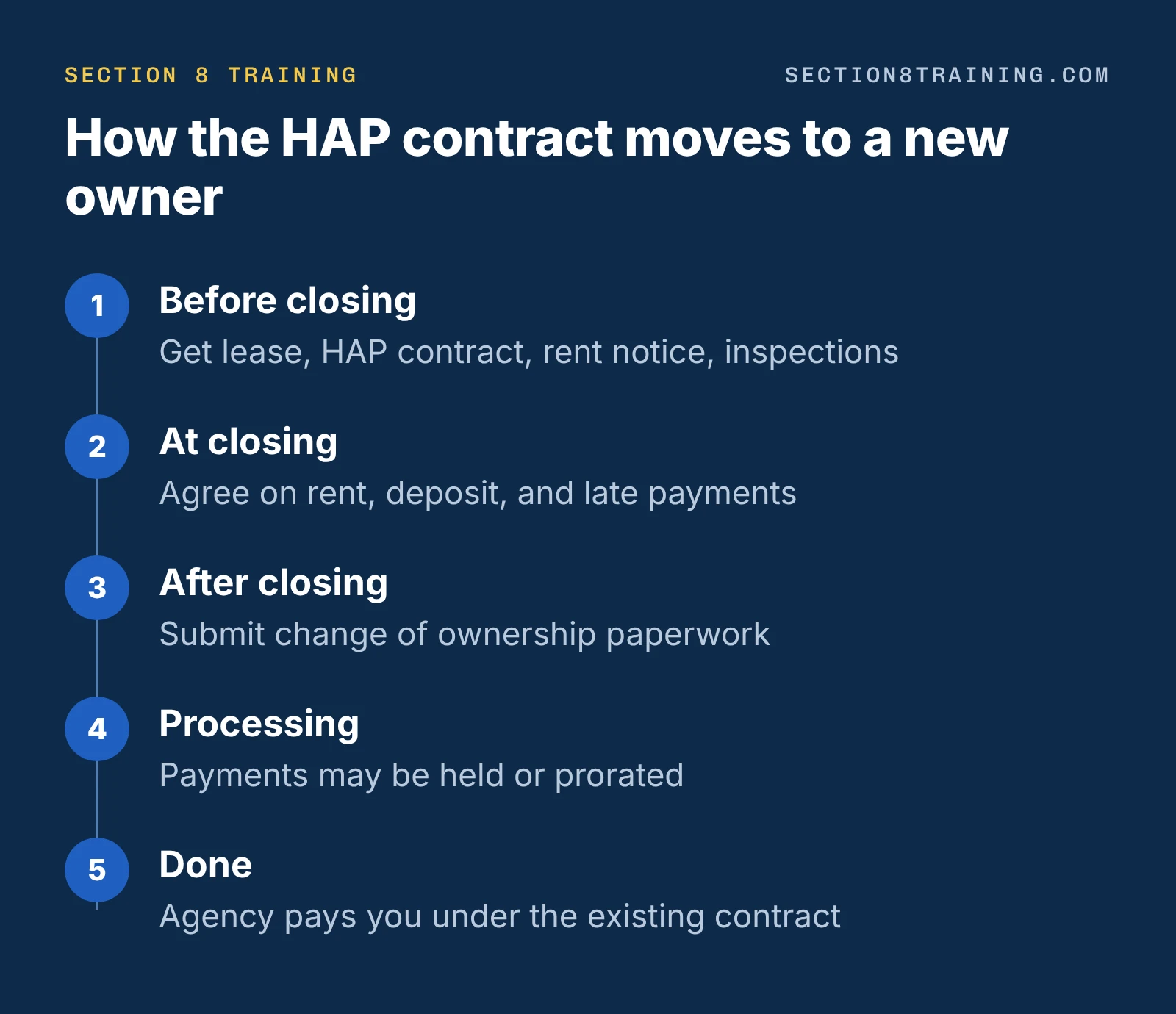
The process usually looks like this:
- Before closing, get copies of the current lease, the tenancy addendum, the HAP contract, and the most recent rent and inspection notices from the seller.
- At closing, make sure the purchase agreement says how rent and the security deposit will be handled, including any agency payment that arrives in the seller's name after the sale.
- Right after closing, submit the housing agency's change of ownership paperwork. This typically includes proof of ownership, such as a recorded deed or closing statement, a tax form, and direct deposit details. Some agencies also want a signed acknowledgment from the seller.
- While the agency processes the change, payments may be held, prorated, or sent to the old owner for a month. Agree with the seller in writing that they'll forward any payment that belongs to you.
- Once processed, the agency pays you directly under the existing contract.
Each agency runs this a little differently, so call the specific agency before you close. For an example of the process, Los Angeles County's agency explains in its property ownership changes FAQ that it holds the next month's payment while it processes the transfer and that payments reported late in the month may still go to the former owner. If you're not sure how the contract itself works, this guide to the HAP contract explains what you're agreeing to.
What you can't change right away
Because the lease carries over, you're bound by its terms. That usually means:
- You can't raise the rent mid-lease. Rent increases go through the agency, typically at the lease anniversary, with advance written notice. This guide to how Fair Market Rent works explains how agencies judge the rent.
- You can't end the tenancy just because you bought the house. A sale isn't, by itself, grounds to terminate a voucher tenancy during the lease term. If you want the unit vacant, don't buy it occupied.
- You inherit the security deposit obligation. Make sure the seller transfers the deposit to you at closing, or credits you for it.
Due diligence you can't skip
Buying a tenant-occupied house means buying some things you can't fully see. Your job is to see as much as possible before you commit.
Inspect the unit
Your purchase agreement should give you the right to a full home inspection with reasonable notice to the tenant. Don't accept a drive-by or a few photos. Check the roof, mechanical systems, plumbing, electrical, windows, and signs of water damage, just as you would on a vacant house.
Also look at the property through the agency's eyes. The unit has to keep passing periodic inspections. If it's close to failing, you'll be the one paying to fix it, often on a deadline. This guide to NSPIRE inspections covers what inspectors look for now.
Review the paperwork
Ask the seller for:
- The current lease and any amendments
- The HAP contract and tenancy addendum
- The most recent rent change notice from the agency, which shows the contract rent, the agency's portion, and the tenant's portion
- The last one or two inspection reports
- A rent ledger for at least the past 12 months
- Any notices, violations, or correspondence with the agency or the tenant
Get an estoppel certificate
An estoppel certificate is a short document the tenant signs confirming the key facts of their tenancy: the rent, the security deposit, the lease dates, and whether they have any disputes with the landlord. It protects you from surprises after closing, such as a tenant who says they paid a larger deposit than the seller claimed or were promised repairs that never happened.
Many purchase agreements make the estoppel a condition of closing. Ask your attorney or agent to include it.
Red flags
Walk away, or renegotiate hard, if you see any of these:
- The tenant's share is unpaid. The agency's portion may be arriving fine while the tenant owes months of their share. That debt usually stays with the seller, but the relationship comes with you.
- Recent failed inspections or abatement notices. If the agency has stopped or reduced payments because of a failed inspection, you're buying a problem with a deadline.
- No paperwork. A seller who can't produce the lease, HAP contract, or rent notice may not be managing the property properly.
- Rent well below the payment standard. You may be able to raise it later, but only with agency approval and only up to what's reasonable. Don't price the deal as if you'll get the increase.
- The seller won't allow a full inspection. If you can't see the inside, assume the worst and price accordingly, or pass.
- Side agreements. Any extra payment the tenant makes outside what the agency approved is a serious program violation. If you discover one, talk to an attorney before you close.

Running the numbers on an occupied unit
An occupied property's numbers start with what's actually in place, not what the property could earn.
Use the current contract rent. That's the number in the latest rent notice. Treat any future increase as a bonus, not part of your offer price.
Budget for deferred maintenance. Long-term tenants often mean a unit hasn't been updated in years. Plan for repairs when the tenant eventually moves out, including paint, flooring, and fixtures.
Account for the transfer gap. If the agency holds a payment while it processes the ownership change, you may go a month with less income. Have reserves to cover it.
Check the utility setup. Who pays which utilities affects both the tenant's share and your expenses. Make sure the lease, the rent notice, and reality all match.
Plan for turnover anyway. Even long-term tenants move eventually. Your numbers should still work with a few weeks of vacancy and a make-ready.
This breakdown of the numbers nobody shows you before you buy a Section 8 rental walks through every expense line, and this guide to Section 8 cash flow explains how the agency's portion and the tenant's portion fit together.
So, should you buy with a tenant in place?
Buying a house with a Section 8 tenant makes sense when:
- The paperwork is complete and current
- The tenant pays their share on time
- The unit passed its last inspection without major issues
- You could fully inspect the property
- The deal works at the current rent
It makes less sense when you're counting on a rent increase, the seller is vague about the tenant's history, or you can't see inside the unit. In those cases, a vacant property you can inspect, repair, and lease on your own terms may be the safer first deal.
Get a second set of eyes on your deal
Tenant-occupied deals reward investors who know what to ask for. The difference between a stable, cash-flowing rental and an expensive headache is usually sitting in a rent ledger or an inspection report that nobody read carefully.
Section 8 Training helps investors with $15,000 or more ready to invest analyze deals, review agency paperwork, and build the team to run rentals well. If you're looking at a tenant-occupied property, or wondering whether it's the right first move, apply and book a strategy call. It's a 30-minute conversation about your capital, your market, and your next deal.


