



Most rental property loans ask for 20 to 25 percent down. That's the wall many new investors hit. House hacking is the way around it: you buy a small multifamily property as your home, live in one unit, and rent out the others.
Because you live there, you can use owner-occupied financing, which usually means a much smaller down payment. Add Section 8 tenants in the other units, and a large share of the rent arrives from the housing agency each month.
This guide explains how house hacking with Section 8 works, what the occupancy rules require, how lenders count the rent, how to pick a property, and what living next door to your tenants is really like.
What house hacking is
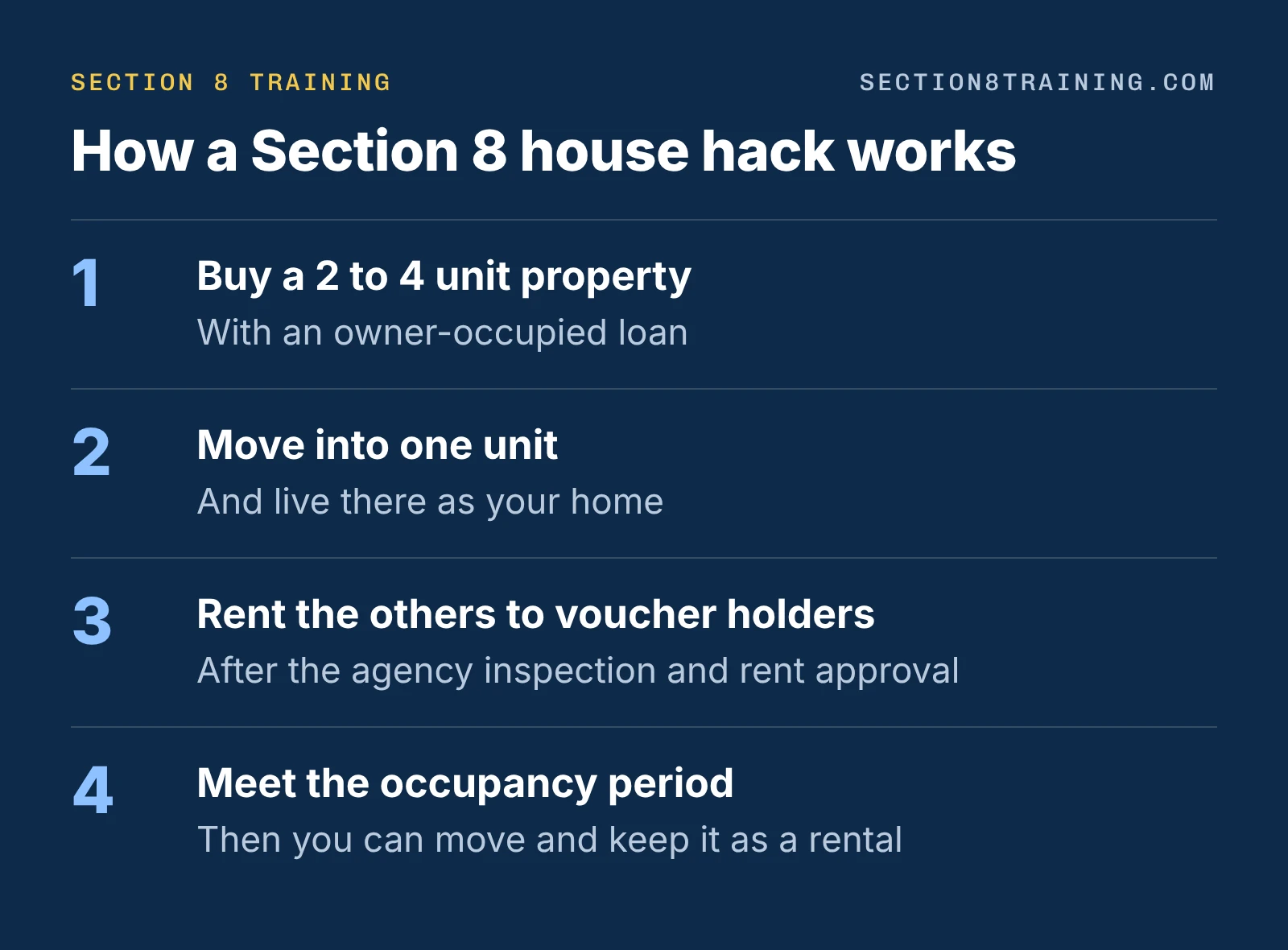
House hacking means buying a property with two to four units, moving into one, and renting the rest. The rent from the other units helps cover your mortgage. In a good deal it covers most of it.
It's a common first step for a few reasons:
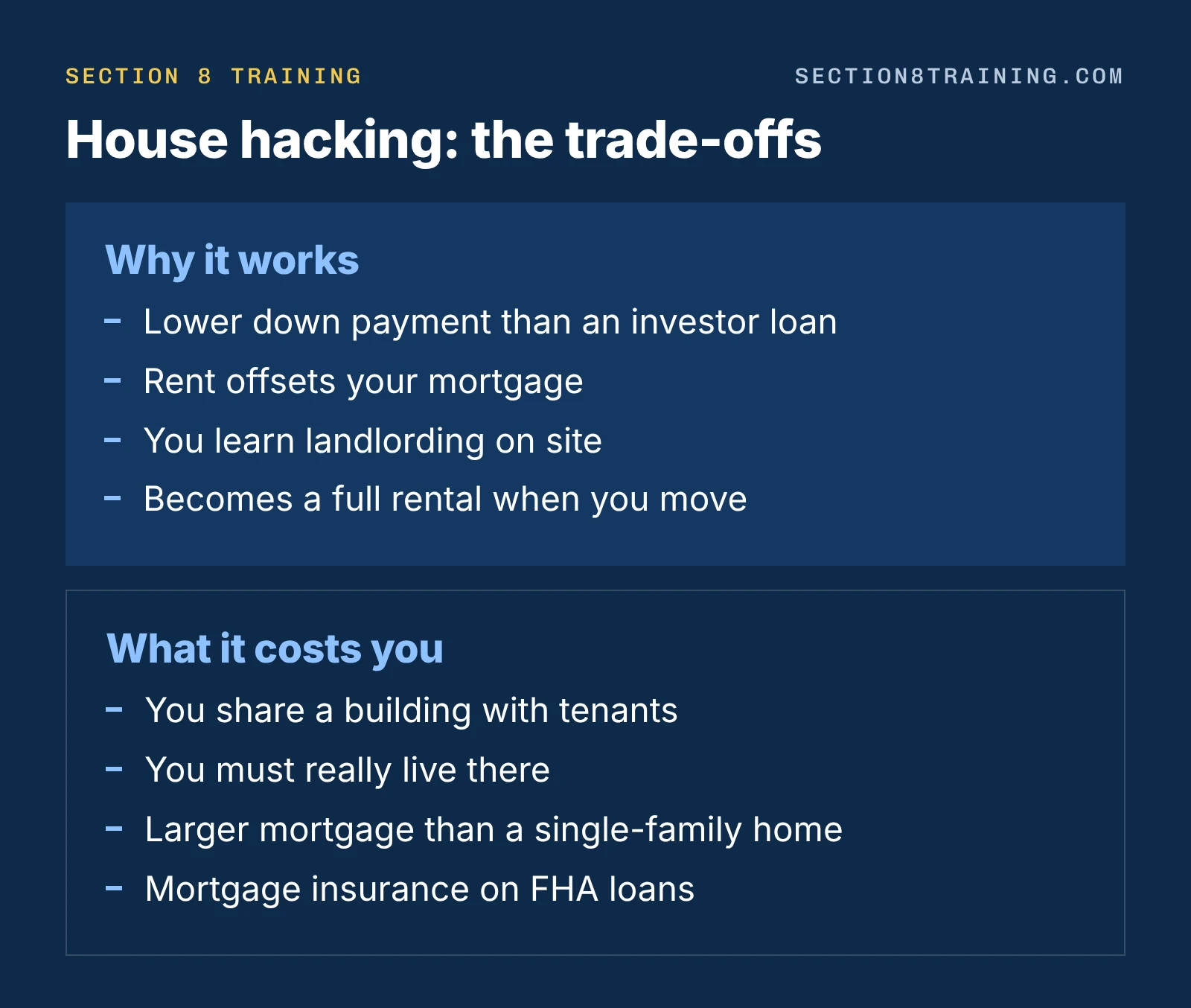
- Lower down payment. Owner-occupied loans generally require less cash than investor loans.
- Better loan terms. Rates on a primary residence are usually lower than on a rental.
- You learn landlording up close. You're on site for repairs, questions, and inspections.
- It becomes a rental later. When you move out, you can keep it and rent your unit too.
House hacking isn't free money. You're a landlord and a neighbor at the same time, and you're taking on a mortgage that's bigger than you might carry for a single-family home.
Owner-occupied loans and occupancy rules
The two most common loan types for a house hack are FHA and conventional.
FHA loans. The Federal Housing Administration insures loans on one-to-four-unit properties when the borrower lives in one of the units. FHA's minimum down payment is 3.5 percent for borrowers who meet its credit requirements, and lenders can add their own standards on top. FHA loans carry mortgage insurance, which adds to the monthly payment. HUD's overview of its loan programs is a good starting point.
Conventional loans. Fannie Mae and Freddie Mac also back owner-occupied loans on two-to-four-unit properties, and their minimum down payments for these have come down in recent years. Ask a lender what's currently available for your situation.
The occupancy rule matters. These loans are for a home you will live in. FHA's guidance on how it defines an owner occupant explains the standard: you're expected to move in within 60 days of closing and to intend to live there for at least one year. Saying you'll live in a property when you don't plan to is mortgage fraud. House hacking is legal because you really do live there.
Three and four units have an extra test. For FHA loans on three-to-four-unit properties, the property generally has to pass a self-sufficiency test, meaning the projected rent has to be enough to cover the mortgage payment under FHA's formula. Duplexes don't face that test, which is one reason they're the most common house hack.
Counting voucher rent toward qualifying
Lenders can often count part of the rent from the other units as income when they qualify you. That can make the difference between qualifying and falling short.
How it works depends on the loan and the lender:
- If the units are already rented, the lender will usually want the leases.
- If they're vacant, the lender typically relies on the appraiser's estimate of market rent.
- Lenders commonly count only a portion of the rent, often 75 percent, to allow for vacancy and expenses.
Fannie Mae's guidelines on rental income describe how conventional lenders document it. FHA has its own rules, and individual lenders may be stricter.
Section 8 rent is rent. A lease and a Housing Assistance Payments contract document the amount in writing, which lenders like. Talk to a loan officer who has closed two-to-four-unit owner-occupied loans before you start shopping, and ask exactly how they'll treat the rent.
Picking the right 2 to 4 unit
A good house hack has to work as your home and as a rental.
Check the rent first. The rent a housing agency approves depends on its payment standard for the bedroom size, the utility allowance, and whether the rent is reasonable compared with similar units nearby. Look up the area on HUD USER's Fair Market Rent data, then call the agency for its current payment standards. This guide to how Fair Market Rent works explains the steps.
Look at bedroom counts. Units with two or three bedrooms tend to fit more voucher households than studios or one-bedrooms. Ask the agency which bedroom sizes are most in demand.
Check the utilities. Separate meters for each unit are simpler. If utilities are shared, you'll likely pay them, and that changes your numbers.
Inspect for the agency's standard. Every assisted unit has to pass the housing agency's inspection. Older multifamily buildings can have electrical, plumbing, or lead paint issues that cost real money. This guide to NSPIRE inspections covers what inspectors look for.
Ask about owner-occupied rules. Tell the agency you'll live in one of the units. Program rules restrict renting to close family members, and local landlord-tenant rules can differ for owner-occupied buildings.
Run the numbers without your unit. Total the mortgage, taxes, insurance, mortgage insurance, repairs, and reserves. Then subtract the rent from the other units. What's left is your real housing cost. Compare it with what you pay now.
Living next to your tenants
This is the part spreadsheets leave out. When you house hack, your tenants know where you live.
A few habits make it easier:
- Screen carefully and consistently. The agency confirms voucher eligibility. You choose the tenant, using the same written criteria for every applicant. This guide to Section 8 tenant screening covers what's allowed.
- Set up a repair request process. A phone number or an email address for requests, with clear response times, keeps repairs from becoming doorstep conversations.
- Keep it professional. Be friendly, follow the lease, and put important things in writing.
- Know your responsibilities. As a Section 8 landlord you agree to maintain the unit and follow the HAP contract. This overview of Section 8 landlord responsibilities lays them out.
Many house hackers say the first year taught them more than any course could, because every problem was thirty feet away. That's a benefit. It's also a reason to be honest with yourself about whether you want that.
Moving out and keeping it
House hacking pays off most after you move. Once you've met the occupancy requirement, you can generally move out, rent your unit, and keep the loan in place. At that point you own a fully rented small multifamily property that you bought with an owner-occupied down payment.
Before you move:
- Read your loan documents and confirm the occupancy period.
- Tell your insurance agent. A property that's no longer owner-occupied needs a different policy.
- Plan the next purchase carefully. Buying another home with an owner-occupied loan means truly moving into it, and lenders will look at the mortgage you already have.
- Re-run the numbers with all units rented and with professional management, even if you plan to manage it yourself.
Is house hacking with Section 8 right for you?
It fits buyers who are willing to live in a small multifamily property for at least a year, have stable income and decent credit, and want a lower-cash way to own their first rental.
It's a harder fit if you need a single-family home for your household, if two-to-four-unit properties are scarce or expensive where you live, or if you don't want to share a wall with a tenant. In that case, a separate rental with investor financing may suit you better. Our guides to financing a Section 8 rental and how much money you need to start compare the paths, and Section 8 investing for beginners covers the basics.
Talk through your first move
House hacking with Section 8 can lower the cash you need for a first property, but the details matter: the loan type, the occupancy rule, the rent the agency will approve, and the condition of the building.
Section 8 Training works with investors who have $15,000 or more ready to invest and want to buy with a clear plan. If you're deciding between a house hack and a stand-alone rental, apply and book a strategy call. It's a 30-minute conversation about your capital, your goals, and which first deal fits. This article is general information, not lending or legal advice, so confirm the rules with your lender and local housing agency.


